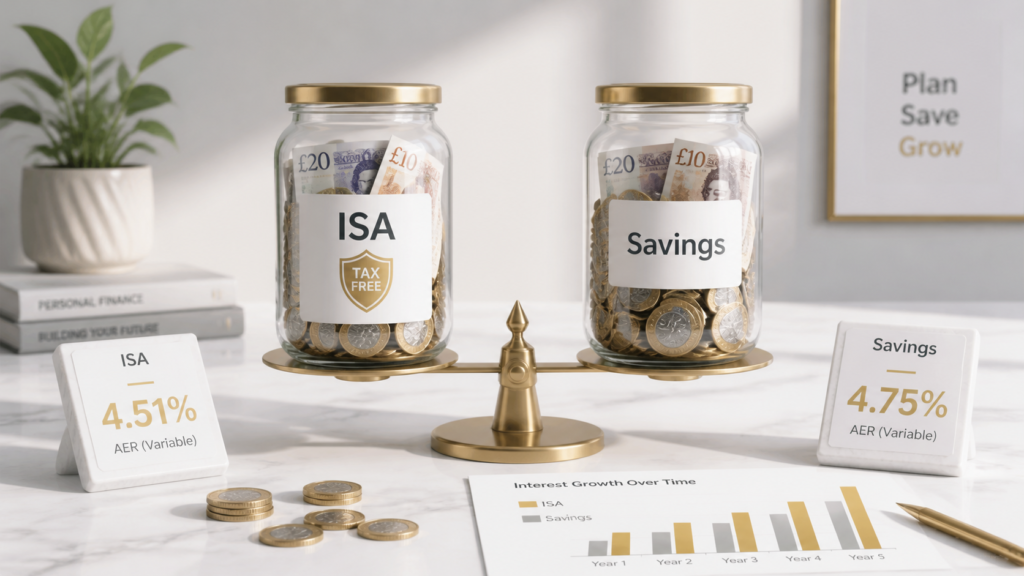
The cash ISA allowance stays at £20,000. In his Autumn Budget on 28 October 2026, Chancellor John Healey scrapped the plan to cut the annual cash ISA limit to £12,000 for under-65s from April 2027. Along with it went two related measures: a 22% charge on interest earned from uninvested cash held inside a Stocks and Shares ISA, and a ban on transferring from an investment ISA into a cash ISA.
The practical upshot is that nothing changes for savers. You can still put up to £20,000 into cash this tax year and next, at any age, and the interest stays tax-free.
What was going to change, and what actually happened
| Measure | Planned under Rachel Reeves | Status after October 2026 Budget |
|---|---|---|
| Cash ISA allowance | £20,000 cut to £12,000 from April 2027 for under-65s | Scrapped. Stays at £20,000 for all ages |
| 22% charge on uninvested cash in Stocks and Shares ISAs | Due to apply | Scrapped |
| Transfers from investment ISAs to cash ISAs | Due to be banned | Still allowed |
| Total ISA allowance | £20,000 | Unchanged at £20,000 |
The cut was originally announced in 2025 by the previous chancellor, Rachel Reeves, as a way to push money out of cash and into UK company shares. The argument was that too much household money sits in deposits earning modest interest while the stock market has historically returned more over long periods.
Healey’s reasoning for the U-turn was that education beats restriction. Rather than capping what savers can shelter, the government says it would rather encourage people to invest through persuasion. There was also a practical fear in the background: banks and building societies fund mortgages from deposits, and finance bosses had warned that shrinking the cash ISA pot could tighten lending and push mortgage rates up.
Why this matters more than it sounds
Cash ISAs are the UK’s most popular savings product, and the money has been piling in. Cash ISA subscriptions rose by £26.1bn last year, more than four times the increase seen in Stocks and Shares ISAs. A £12,000 cap would have hit a very large number of ordinary savers, not just wealthy ones.
It also would have arrived at an awkward moment. If you have been using a cash ISA for an emergency fund, a house deposit or a wedding, a cut of £8,000 in annual shelter is the difference between keeping pace and paying tax on your interest.
What the £20,000 limit actually covers
The £20,000 is a single allowance across all adult ISAs, not per account. You choose the split.
- Cash ISA – up to £20,000, tax-free interest, easy or fixed access depending on the account
- Stocks and Shares ISA – up to £20,000, tax-free growth and dividends, values can fall
- Lifetime ISA – £4,000 of your £20,000, with a 25% government bonus, for a first home under £450,000 or retirement at 60
- Junior ISA – separate £9,000 limit per child, no access until 18
- Innovative Finance ISA – peer-to-peer lending, shares the same £20,000
So a split of £10,000 in cash and £10,000 in investments uses your full allowance. Spreading money across several providers does not increase it, and each provider reports to HMRC, so the total is tracked across all of them.
Should you change anything now?
If you were rushing to use a cash ISA before a cut that is no longer happening, you can relax. There is no deadline created by this Budget and no advantage to moving money in a panic.
Three things are still worth doing:
- Check your rate, not just your wrapper. A tax-free 2.8% is worse than a taxed 4.6% for most basic-rate taxpayers with modest balances. The ISA wrapper is only worth what the underlying rate gives you.
- Use the Personal Savings Allowance properly. Basic-rate taxpayers get £1,000 of interest tax-free outside an ISA, higher-rate £500, additional-rate £0. Once your non-ISA interest exceeds that, the ISA wrapper starts earning its keep.
- Do not invest money you need soon. The reversal removes pressure to move into shares, and that is no bad thing for money you will spend within two or three years.
Our comparison of ISAs and ordinary savings accounts runs the tax maths with current rates if you are trying to decide where the next £1,000 should go.
What it means if you are retired or a higher-rate taxpayer
The two groups that would have been hit hardest by the cut were older savers with large cash balances and anyone paying tax at 40%.
For pensioners, the reversal removes a complication rather than creating a benefit. The £12,000 cap would only have applied to under-65s, which meant two people with identical savings could have had different allowances depending on their birthday. That is now moot: the limit is £20,000 regardless of age.
For higher-rate taxpayers, the ISA wrapper matters more than for anyone else, because the Personal Savings Allowance falls to £500 and disappears entirely at additional rate. If your savings interest is likely to exceed that, keeping the money inside an ISA is worth real money each year, and £20,000 of tax-free capacity is a meaningfully bigger bucket than £12,000.
One thing the Budget did not fix: the Personal Savings Allowance itself has been frozen for years, so as rates have risen, more basic-rate savers have drifted into paying tax on interest for the first time.
Why so much online guidance is now out of date
This is the catch with a policy reversal. Hundreds of articles, videos and bank help pages were written between 2025 and October 2026 explaining the £12,000 cap, and many are still live and still ranking. If you search for the cash ISA limit and find a page confidently telling you the allowance drops to £12,000 in April 2027, check the date on it. That plan no longer exists.
The same applies to the 22% charge on uninvested cash inside a Stocks and Shares ISA, which was widely covered as a done deal and has also been dropped.
Frequently asked questions
Is the cash ISA allowance going down to £12,000?
No. That plan was scrapped in the Autumn Budget on 28 October 2026. The cash ISA allowance stays at £20,000 for the 2026/27 tax year and from April 2027.
Does the £20,000 limit apply to over-65s too?
Yes. The original cut would only have affected under-65s, which created an odd two-tier system. With the cut reversed, every eligible adult gets the same £20,000.
Is there still a 22% charge on cash held in a Stocks and Shares ISA?
No, that measure was dropped at the same time. You can hold uninvested cash in a Stocks and Shares ISA without that charge, though providers may pay little or no interest on it.
Can I still transfer a Stocks and Shares ISA into a cash ISA?
Yes. The planned ban on transfers from investment ISAs to cash ISAs was scrapped. Transfers between ISA types remain allowed and do not use up new allowance.
Will the allowance change again?
Nothing is guaranteed beyond the current Parliament’s plans, and ISA rules have now been changed twice in two years. Treat the £20,000 as the figure for this tax year and next, and check again after the next Budget.
Sources
- Reuters: UK’s Healey to reverse cuts to cash ISA allowances
- The Guardian: Healey poised to overturn cut to cash ISA allowance
- Triodos Bank: Cash ISA limit changes reversed in Autumn Budget
This article is general information, not financial advice. Tax rules and ISA limits can change, and your own circumstances matter. Figures reflect the Autumn Budget of 28 October 2026.