Protein Shakes for Weight Loss: Do They Actually Help?
Protein shakes are everywhere, from gym bags to supermarket shelves, and many are sold with weight loss in mind. But do they actually help you lose weight, or are they an expensive way to drink calories?
Here is what the evidence says, how much protein you really need, and when a shake might be worth it.
Do protein shakes help you lose weight?
Only indirectly. A protein shake does not burn fat on its own. What it can do is help you stick to a calorie deficit, because protein tends to keep you feeling full for longer than the same calories from carbohydrate or fat.
The research shows a small effect. A 2018 review of nine trials in people who were overweight or obese found that those given whey protein lost slightly more weight and fat than those who were not, about 0.6kg of weight and 1.1kg of fat on average (Journal of the American College of Nutrition). Helpful, but modest.
The catch is calories. If you drink a shake on top of what you normally eat, you add calories and may gain weight. A shake only helps if it replaces something, such as a sugary snack, or helps you eat less later.
How much protein do you actually need?
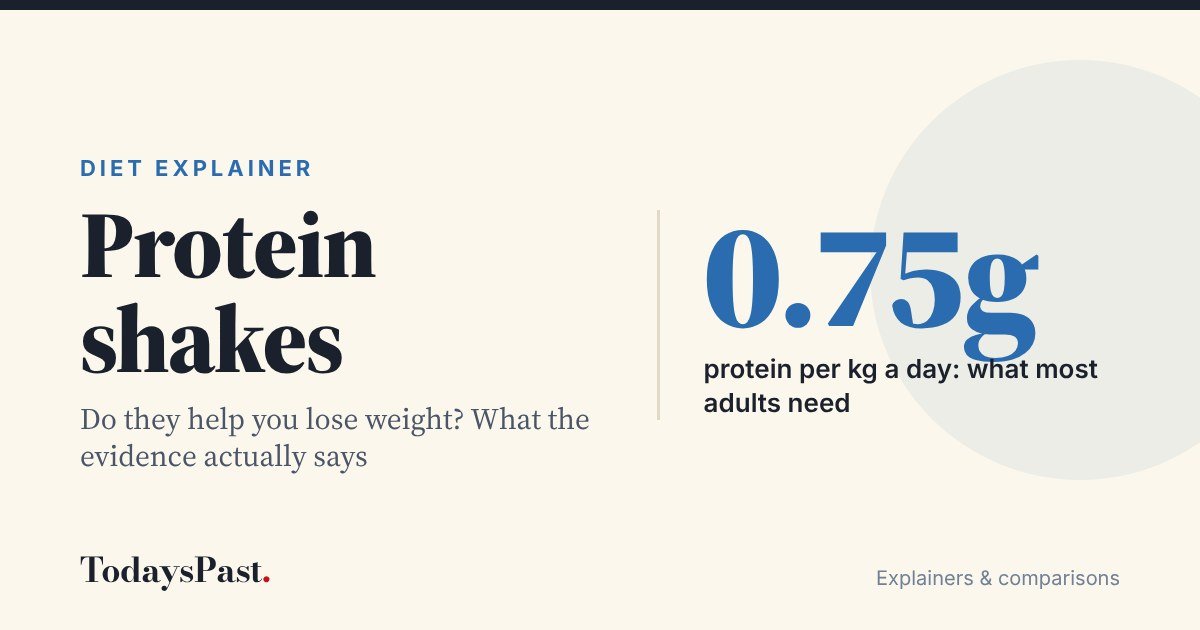
The UK recommendation for adults is 0.75g of protein per kg of body weight per day. That is about 56g a day for a 75kg man and 45g for a 60kg woman (British Nutrition Foundation).
Most people already get more than that. Adults aged 19 to 64 eat an average of 76g a day. The British Nutrition Foundation says most people do not need protein supplements, and that food is better because it brings other nutrients too.
People doing hard strength or endurance training may need more: sports bodies suggest roughly 1.2g to 2.0g per kg a day (British Nutrition Foundation). Our protein calculator works out a target for your weight and activity.
Protein shakes vs meal replacement shakes
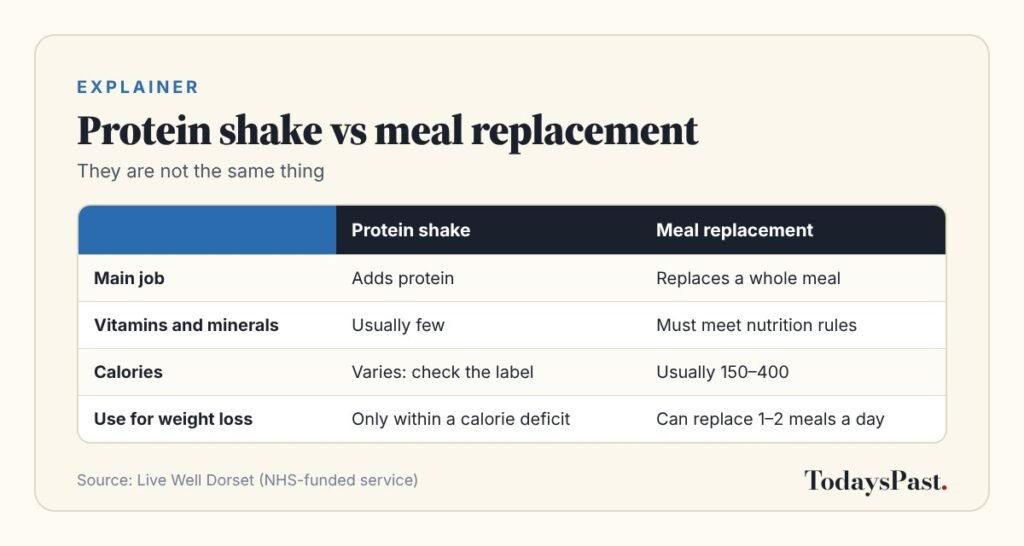
These are often confused, but they do different jobs. A protein shake adds protein to your diet. A meal replacement shake is designed to replace a whole meal, with vitamins and minerals included, usually at 150 to 400 calories (Live Well Dorset).
- Protein shake: useful after exercise or to top up a low-protein meal. Not nutritionally complete.
- Meal replacement: can replace one or two meals a day as part of a structured weight loss plan. Not to be confused with a protein shake.
- Total diet replacement: soups and shakes replacing all food for a set period. This is used by the NHS for some people with type 2 diabetes, but only with medical supervision.
Food first: easy ways to get more protein
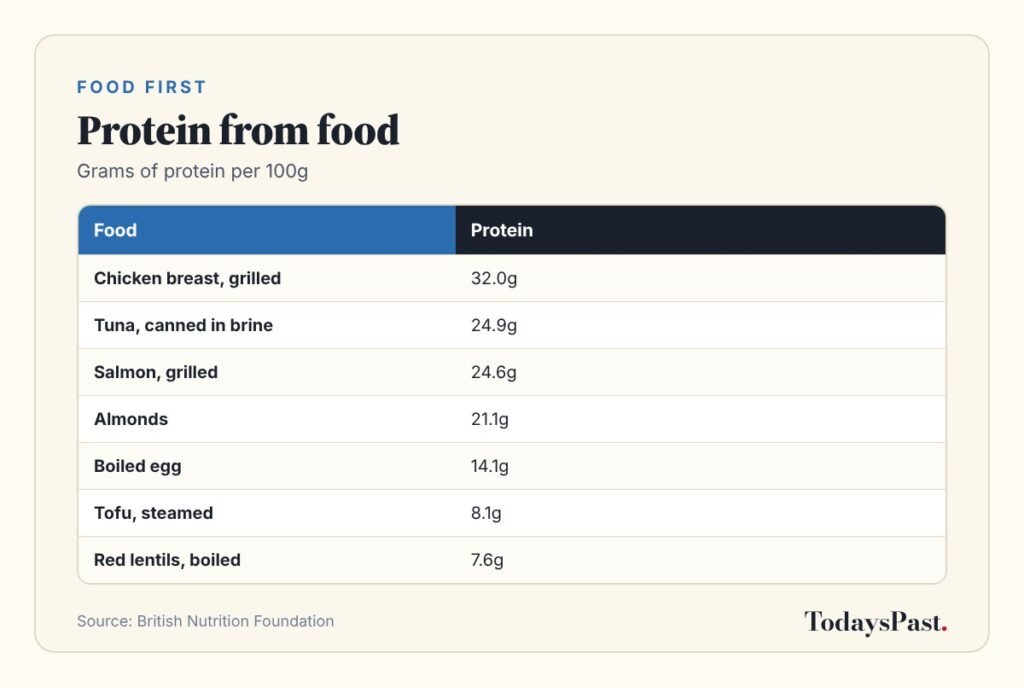
| Food | Protein per 100g |
|---|---|
| Chicken breast, grilled | 32.0g |
| Lean beef steak, grilled | 31.0g |
| Tuna, canned in brine | 24.9g |
| Salmon, grilled | 24.6g |
| Almonds | 21.1g |
| Boiled egg | 14.1g |
| Tofu, steamed | 8.1g |
| Red lentils, boiled | 7.6g |
| Canned chickpeas | 7.2g |
Source: British Nutrition Foundation. Greek yoghurt, cottage cheese, milk and beans are also cheap, filling sources.
If you do use a protein shake
- Count it. Include the calories in your daily total. Our calorie deficit calculator helps you set a target.
- Use it to replace, not add. Swap it for a snack, not alongside one.
- Check the label. Some ready-made shakes contain a lot of added sugar.
- Mix with water or skimmed milk if you are watching calories.
- Do not rely on it. Meals with protein, vegetables and fibre will keep you fuller for longer.
For other approaches, read our guides to intermittent fasting and setting a safe calorie deficit.
Related reading
- Calorie Deficit Explained: How to Set a Safe, Sustainable Target
- BMR vs TDEE: What’s the Difference, and Which Should You Use?
- Intermittent Fasting Explained: Does 16:8 or 5:2 Really Work?
- Ozempic vs Wegovy vs Mounjaro — UK Comparison 2026
Frequently asked questions
Frequently asked questions
Will protein shakes make me lose weight?
Not by themselves. They can help if they replace higher-calorie food or keep you full, so you eat less overall. Drunk on top of your usual diet, they add calories.
Can I replace a meal with a protein shake?
It is better to use a proper meal replacement shake, which contains the vitamins and minerals a meal should provide. A standard protein shake does not.
How much protein do I need a day?
The UK recommendation is 0.75g per kg of body weight, which is about 45g to 56g a day for most adults. People doing hard training may need more.
Are protein shakes bad for you?
For most healthy adults they are safe in normal amounts, but most people do not need them. If you have kidney disease, speak to your doctor before increasing your protein.
When is the best time to drink a protein shake?
After strength training is the most common time, as 20g to 25g of protein then helps muscle repair. For appetite control, some people have one between meals instead of a snack.
This article is general information, not medical advice. Speak to your GP, a pharmacist or a registered dietitian before making big changes to your diet.
Sources: British Nutrition Foundation, Wirunsawanya et al, 2018, Live Well Dorset.