Smoothies for Weight Loss: Do They Help, and How to Make Them Filling
Smoothies look like the perfect healthy breakfast: fruit, colour, convenience. But a smoothie can hide a surprising amount of sugar, and drinking your calories usually fills you up less than eating them.
Here is what the NHS says about smoothies, whether they help with weight loss, and how to make one that actually keeps you full.
Are smoothies good for weight loss?
Not on their own. Smoothies can be part of a healthy diet, but the NHS is clear that even unsweetened fruit juice and smoothies are sugary (NHS).
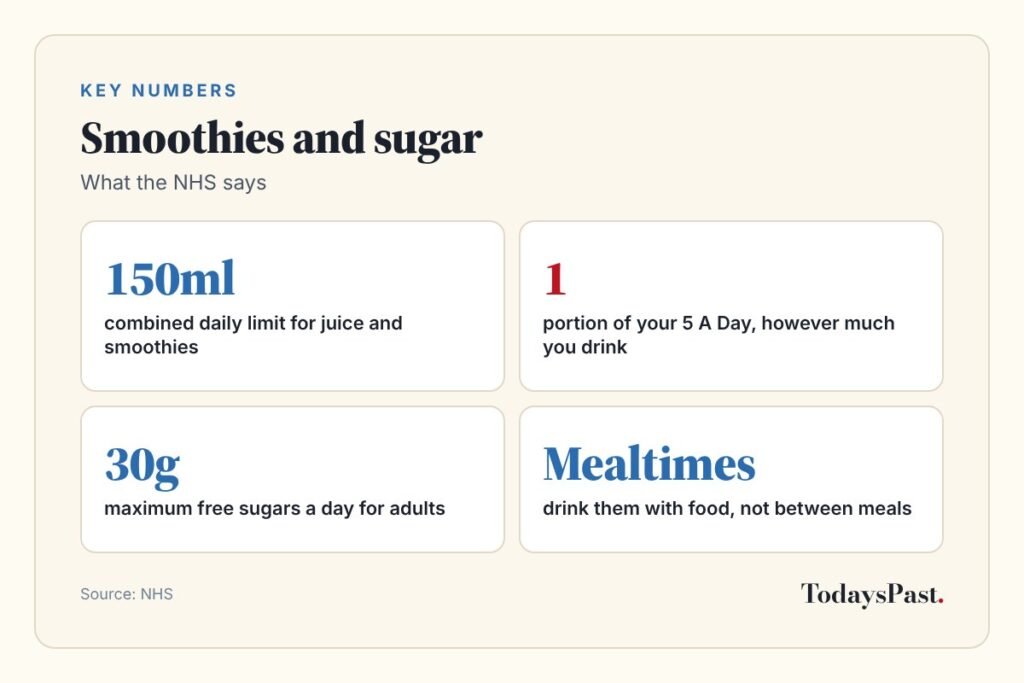
When fruit is blended, the sugars inside are released. These count as free sugars, the same category as added sugar and honey. Adults should have no more than 30g of free sugars a day, roughly seven sugar cubes (NHS).
Liquids also tend to be less filling than solid food. A large fruit smoothie can contain as many calories as a meal, without stopping you feeling hungry an hour later.
What the NHS recommends
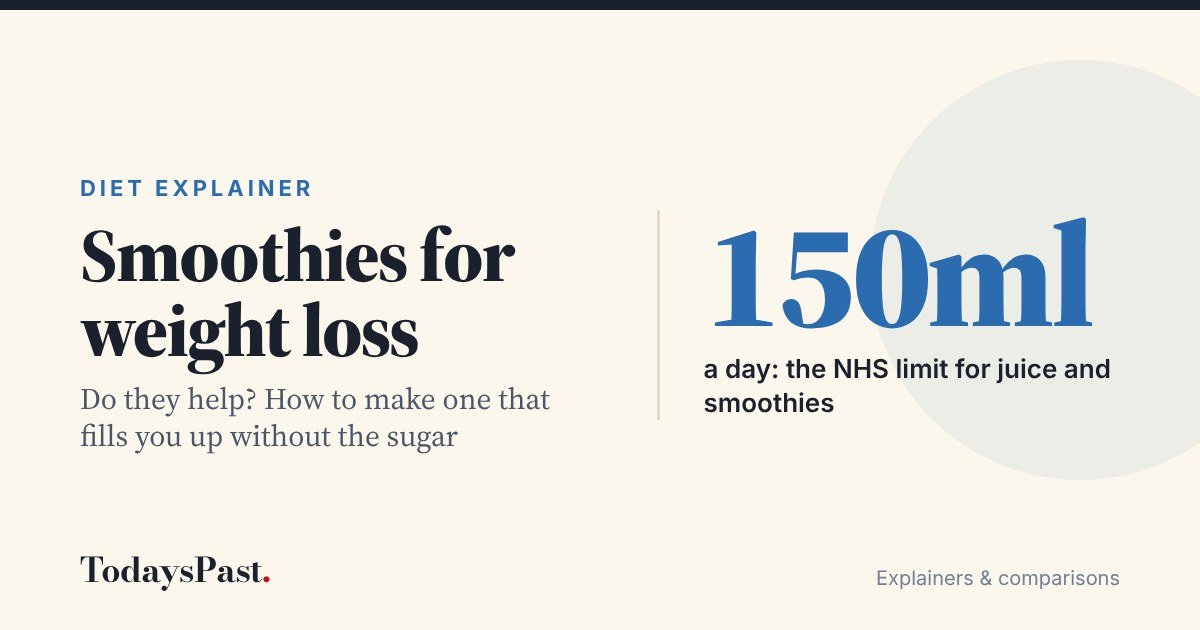
- Limit juice and smoothies to 150ml a day in total (NHS).
- They only count as one of your 5 A Day, however much you drink.
- Drink them with meals, not as a between-meal snack, to protect your teeth.
How to make a smoothie that fills you up
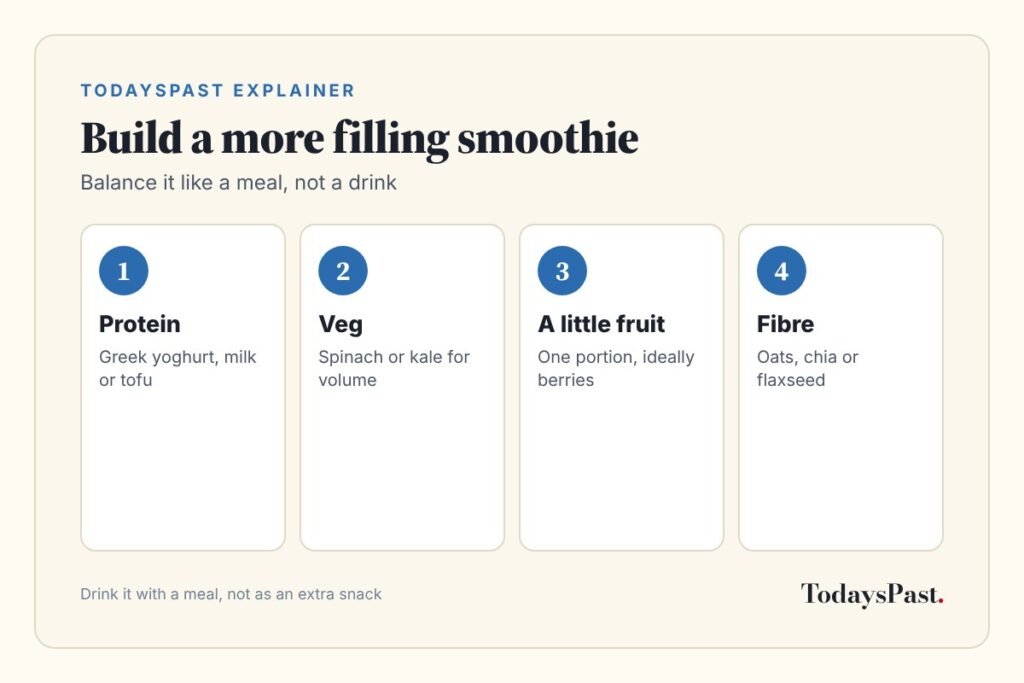
If you enjoy smoothies, the trick is to treat them like a meal, not a drink. Build it around protein and fibre, with fruit as a smaller part:
- Protein: Greek yoghurt, milk, soya milk or silken tofu. Protein helps you feel full for longer. Our protein calculator shows how much you need.
- Vegetables: a handful of spinach or kale adds volume with very few calories, and you will barely taste it.
- A little fruit: one portion is plenty. Berries are a good choice.
- Fibre: a spoonful of oats, chia seeds or ground flaxseed thickens it and slows digestion.
- Skip the extras: leave out honey, syrups and juice as a base, all of which add free sugars.
Three simple ideas
Berry and oat breakfast smoothie
Greek yoghurt, milk, a handful of frozen berries and a spoonful of oats. Thick, filling and lower in sugar than an all-fruit version.
Green smoothie
Spinach, half a banana, a spoonful of nut butter and milk or soya milk. The banana adds sweetness, so no extra sugar is needed.
Chocolate and peanut smoothie
Milk, a teaspoon of cocoa powder, a spoonful of peanut butter and a few ice cubes. It feels like a treat but has no added sugar.
The bottom line
A smoothie will not make you lose weight by itself. What matters is your overall calorie intake. A protein-rich smoothie that replaces a breakfast can help; a sugary fruit smoothie on top of your normal meals can hold you back. To see how much you should be eating, use our calorie deficit calculator.
For more on drinks and weight loss, read our guide to protein shakes for weight loss.
Related reading
- Protein Shakes for Weight Loss: Do They Actually Help?
- Calorie Deficit Explained: How to Set a Safe, Sustainable Target
- Alcohol Units Explained: How Many Units Are in Your Drink?
- Intermittent Fasting Explained: Does 16:8 or 5:2 Really Work?
Frequently asked questions
Frequently asked questions
Are smoothies good for losing weight?
They can be if they are filling and replace a meal, but fruit-heavy smoothies are high in free sugars and are less filling than whole food.
How much smoothie should I drink a day?
The NHS recommends no more than 150ml of fruit juice, vegetable juice and smoothies combined per day.
Do smoothies count as one of my 5 A Day?
Yes, but only as one portion, however much you drink.
Why are smoothies high in sugar?
Blending fruit releases the sugars inside, which then count as free sugars, the type we should limit.
What should I put in a smoothie for weight loss?
Protein, such as Greek yoghurt or milk, vegetables like spinach, a small amount of fruit, and fibre such as oats or chia seeds.
This article is general information, not medical advice. If you have diabetes or another health condition, speak to your GP or a registered dietitian about what is right for you.
Sources: NHS: 5 A Day, what counts, NHS: sugar in our diet, British Nutrition Foundation.