Louisa Dunne: How Britain’s Oldest Cold Case Was Solved After 58 Years
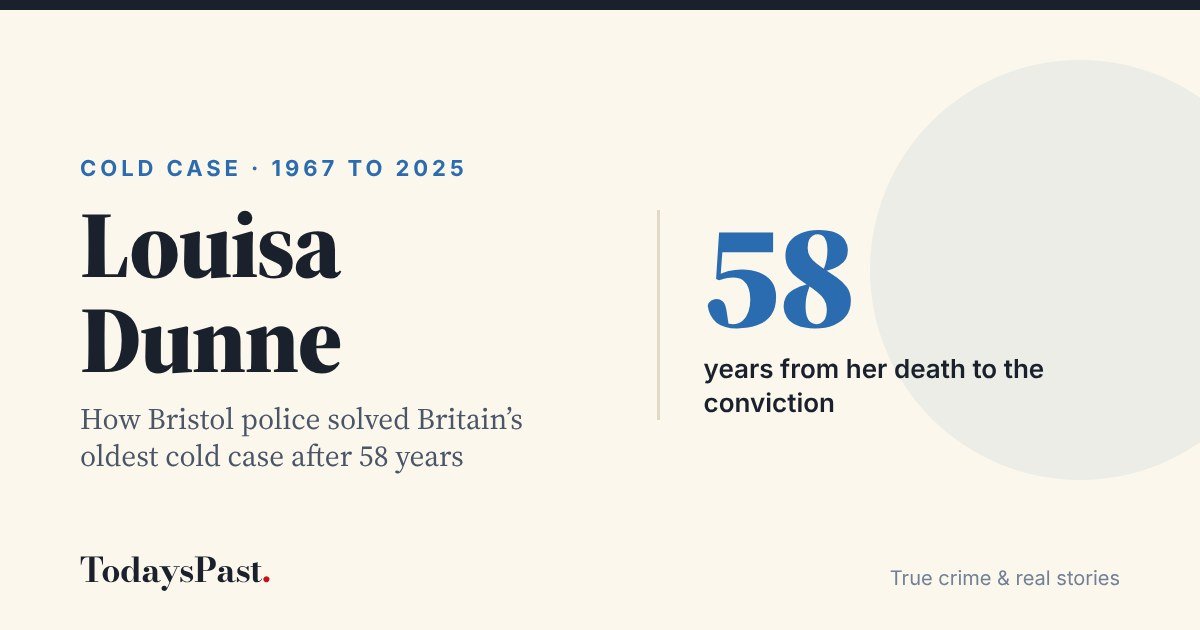
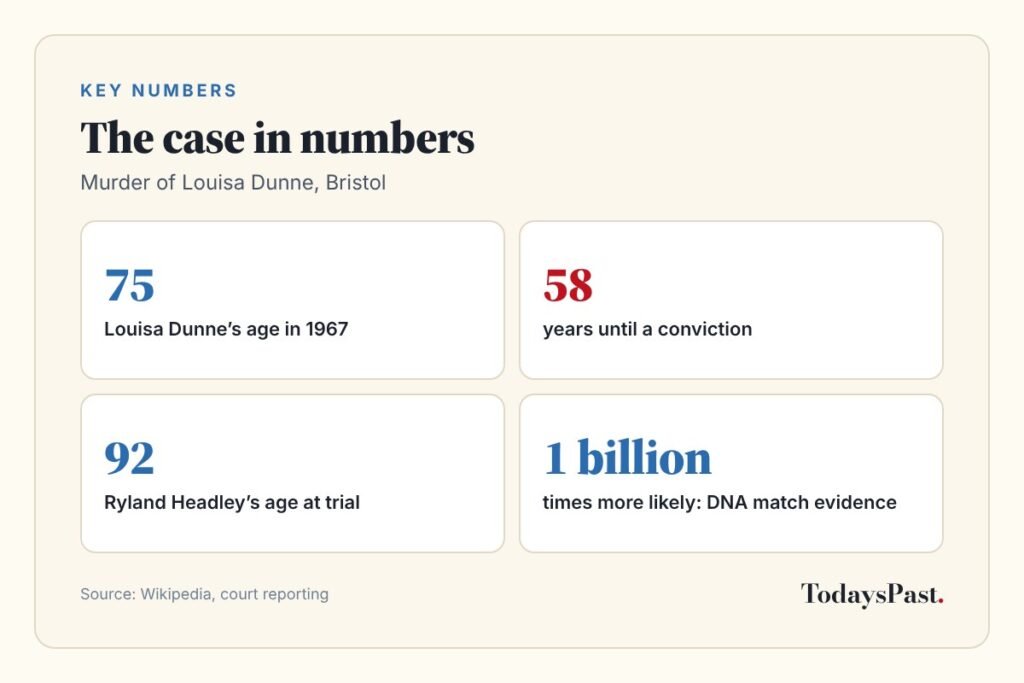
In June 1967, Louisa Dunne, a 75-year-old widow, was killed in her home in Easton, Bristol. For more than half a century, nobody was charged. Then, in 2025, a 92-year-old man was convicted of her rape and murder, in what is believed to be the oldest cold case ever solved in Britain.
This is the story of Louisa, the long investigation, and how stored evidence finally gave her family answers. It contains references to sexual violence, but no graphic detail.
Who was Louisa Dunne?
Louisa Dunne, born Louisa Jarrett in 1892, lived at Britannia Road in Easton, Bristol. She had been widowed twice: her first husband, Edwin “Teddy” Parker, had been a city councillor, and her second was John Dunne (Wikipedia).
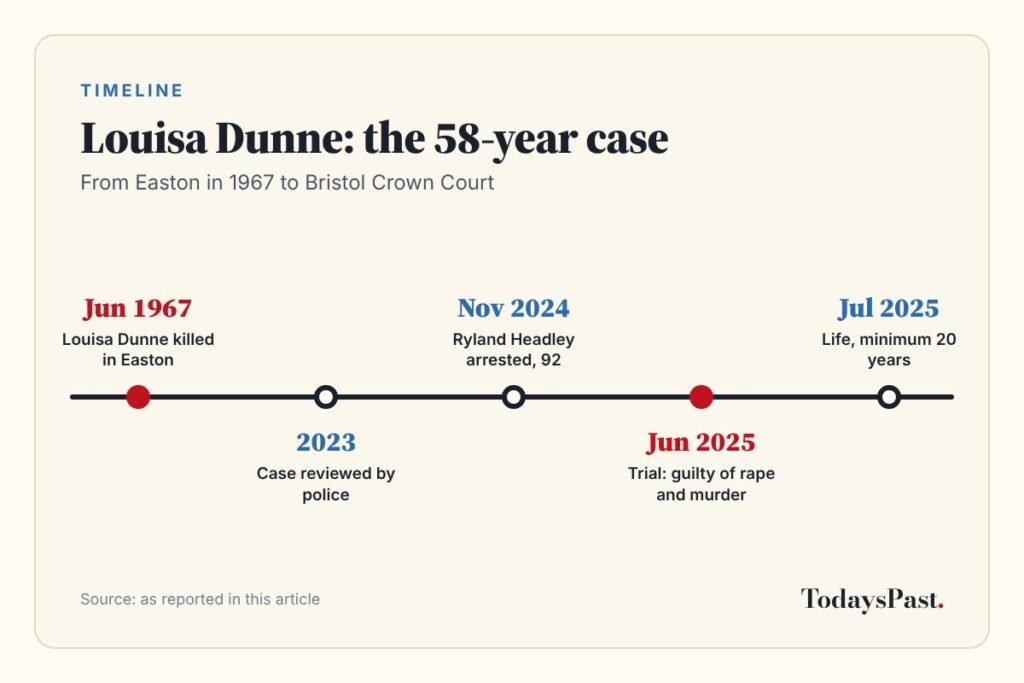
On 28 June 1967, neighbours found her dead in her living room. Police established that she had been raped and killed, probably between 26 and 28 June.
An unsolved case for 56 years
Despite a major investigation at the time, no one was charged. Evidence from the scene, including Louisa’s clothing and palm prints, was kept in storage. Witness statements taken in 1967 also survived, including accounts describing a muffled scream.
How the case was solved
In 2023, Avon and Somerset Police reviewed the case and had the forensic evidence re-examined. Advances in DNA science meant that material from Louisa’s clothing could now be tested in ways that were impossible in 1967 (Wikipedia).
In November 2024, police arrested Ryland Headley, then 92 and living in Ipswich. He had been 35 at the time of the murder. He was charged with rape and murder, and pleaded not guilty to both.
The trial
The trial opened at Bristol Crown Court on 16 June 2025. The prosecution told the jury that DNA from Louisa’s clothing was a billion times more likely to have come from Headley than from anyone else. Palm prints left at the scene in 1967 were also matched to him (Wikipedia).
The jury also heard that in 1977, Headley had been convicted of raping two elderly women in Ipswich, where he had moved after 1967.
The verdict and sentence
On 30 June 2025, the jury found Headley guilty of Louisa’s rape and murder. The next day, Mr Justice Derek Sweeting sentenced him to life imprisonment with a minimum term of 20 years, saying he would never be released (Wikipedia).
He is believed to be the oldest person ever convicted of murder in Britain, and the case is thought to be the oldest cold case solved in British history.
Why this case matters
- Keeping evidence matters. Clothing stored for more than 50 years provided the DNA that solved the case.
- Cold cases are never closed. Police forces continue to review unsolved murders as forensic science improves.
- Answers can still come. Louisa’s family waited almost six decades for justice.
Read more cold cases on TodaysPast, including the story of Peter Sullivan and Diane Sindall, where DNA evidence led to a conviction being overturned after 38 years.
Related reading
- Peter Sullivan: 38 Years for a Murder He Didn’t Commit, and the Search for Diane Sindall’s Killer
- The Hatton Garden Heist: How the 2015 Easter Raid Happened
- The Lockerbie Bombing: What Happened, and Why a New Trial Starts in 2027
- The Brink’s-Mat Robbery: Britain’s Biggest Gold Heist, 43 Years On
Frequently asked questions
Frequently asked questions
Who killed Louisa Dunne?
Ryland Headley was convicted of her rape and murder in June 2025, 58 years after her death.
When was Louisa Dunne killed?
In June 1967, at her home in Easton, Bristol. She was found on 28 June 1967.
How was the Louisa Dunne case solved?
A 2023 police review re-examined stored evidence. DNA from her clothing and palm prints from the scene were matched to Ryland Headley.
What sentence did Ryland Headley get?
Life imprisonment with a minimum term of 20 years. The judge said he would never be released.
Is it the oldest solved cold case in Britain?
It is believed to be the oldest cold case ever solved in British history.
Sources: Murder of Louisa Dunne, Wikipedia, drawing on court reporting. This article describes a person convicted by the courts.