How to Calculate Your Hourly Rate From Your Salary (UK, 2026/27)
Job adverts usually quote a yearly salary, but many of the decisions we make, from comparing two offers to deciding whether overtime is worth it, are easier with an hourly rate. The maths is simple once you know which numbers to use.
This guide shows you how to turn a salary into an hourly, daily, weekly and monthly figure, and back again, with worked examples using 2026/27 UK figures.
How to work out your hourly rate from your salary
Use this formula:
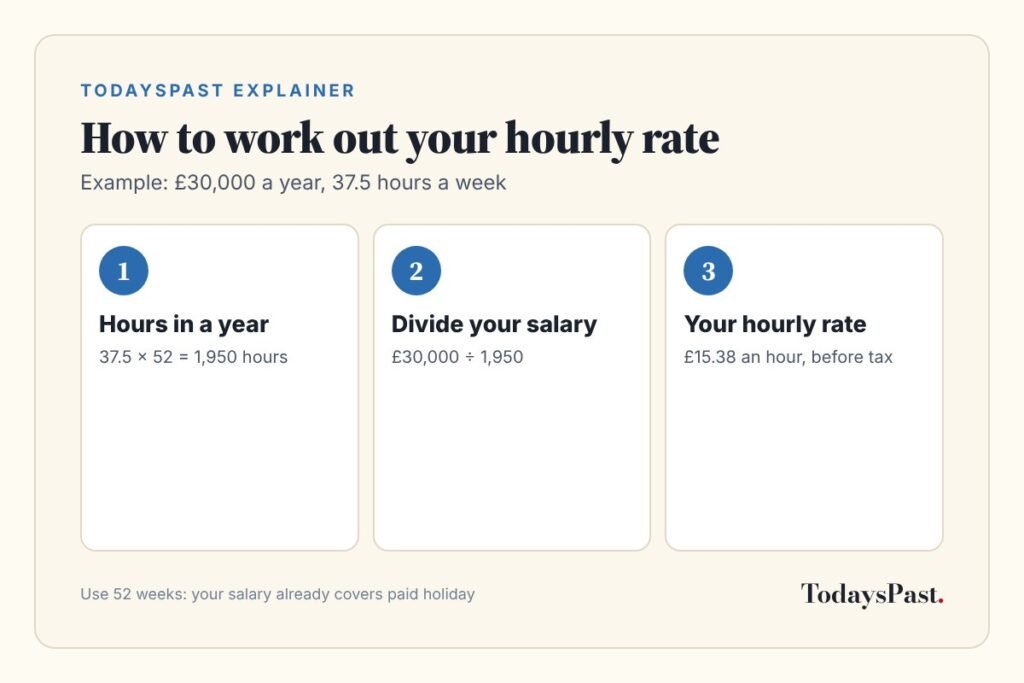
Hourly rate = annual salary ÷ (hours a week × 52)
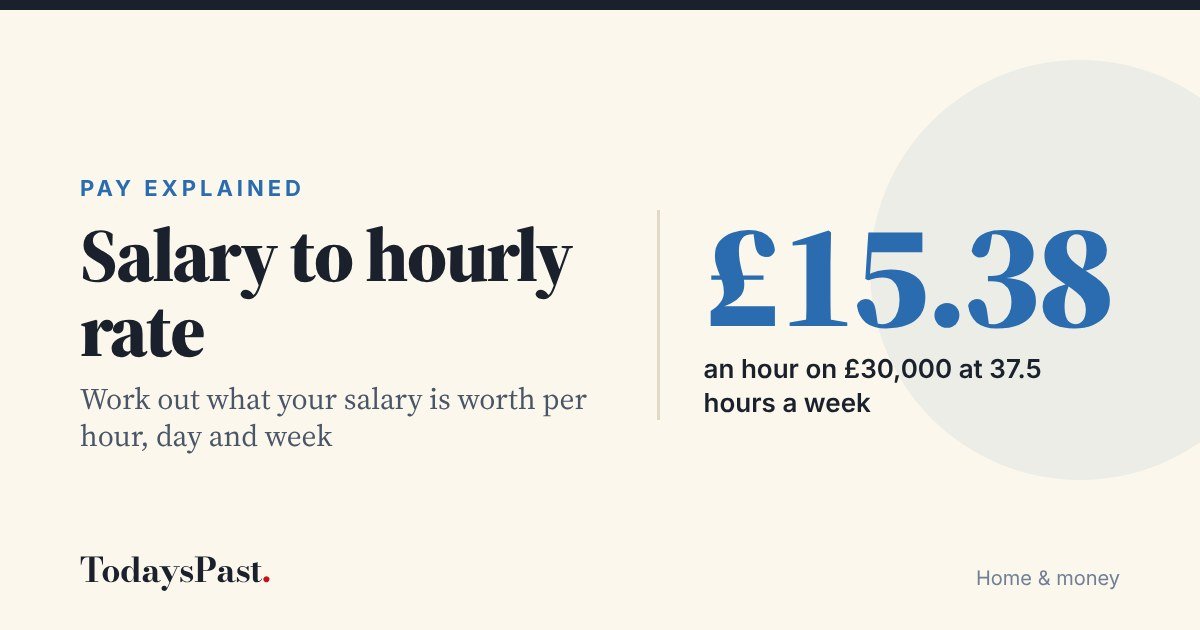
Example: you earn £30,000 and work 37.5 hours a week. 37.5 × 52 = 1,950 hours a year. £30,000 ÷ 1,950 = £15.38 an hour.
Why divide by 52 weeks, not 46?
Your salary is paid every week of the year, including your paid holiday and bank holidays. So the fair hourly figure uses all 52 weeks. If you divide by fewer weeks to remove your holiday, you get a higher number that shows what you earn per hour actually worked. Both are valid, but the 52-week figure is the one to use when comparing salaries.
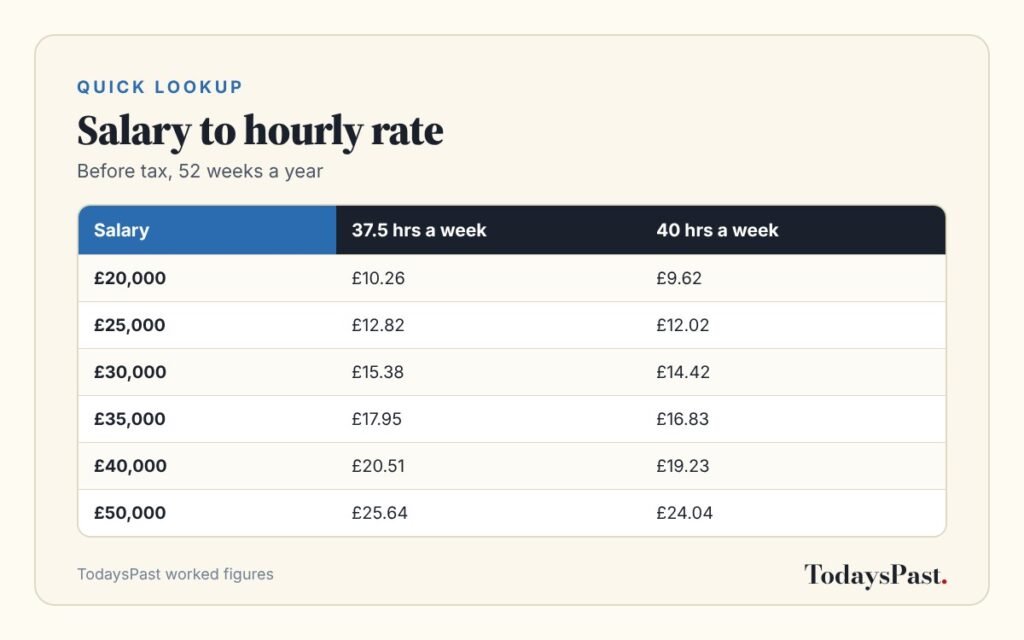
Salary to hourly rate table
| Annual salary | 37.5 hours a week | 40 hours a week |
|---|---|---|
| £20,000 | £10.26 | £9.62 |
| £25,000 | £12.82 | £12.02 |
| £30,000 | £15.38 | £14.42 |
| £35,000 | £17.95 | £16.83 |
| £40,000 | £20.51 | £19.23 |
| £50,000 | £25.64 | £24.04 |
All figures are before tax and National Insurance.
How to work out daily, weekly and monthly pay
- Weekly: salary ÷ 52. £30,000 is £576.92 a week.
- Monthly: salary ÷ 12. £30,000 is £2,500 a month.
- Daily: salary ÷ 260 (5 days × 52 weeks). £30,000 is £115.38 a day.
Note that a month is not four weeks. There are about 4.33 weeks in an average month, which is why monthly pay is a little more than four times weekly pay.
How to convert an hourly rate to a yearly salary
Reverse the formula: hourly rate × hours a week × 52.
Example: £15 an hour for 37.5 hours a week is £15 × 37.5 × 52 = £29,250 a year.
Is your pay above the minimum wage?
From 1 April 2026, the National Living Wage for workers aged 21 and over is £12.71 an hour, up from £12.21 (GOV.UK). Lower rates apply to younger workers and apprentices:
| Age or status | Minimum hourly rate from April 2026 |
|---|---|
| 21 and over | £12.71 |
| 18 to 20 | £10.85 |
| Under 18 | £8.00 |
| Apprentice | £8.00 |
At £12.71, a full-time worker on 37.5 hours a week earns about £24,785 a year before tax. On 40 hours, it is about £26,437. Apprentices get the apprentice rate if they are under 19, or 19 or over and in the first year of their apprenticeship (GOV.UK).
If your salary divided by your hours comes out below the rate for your age, speak to your employer or contact Acas for free advice. Your paid holiday is part of what your salary covers: our guide to calculating holiday entitlement explains how much you are owed.
What about tax?
Everything above is gross pay, before deductions. To see what actually lands in your bank, use our take-home pay calculator, which uses 2026/27 tax, National Insurance, pension and student loan rates. If you work part time, the pro rata salary calculator works out your share of a full-time salary.
Related reading
- How to Calculate Holiday Entitlement in the UK (Including Part-Time and Zero-Hours)
- Compound Interest Explained: How It Works, With UK Examples
- Cash ISA Allowance Stays at £20,000: What Changed
Frequently asked questions
Frequently asked questions
How do I work out my hourly rate from my salary?
Divide your annual salary by your weekly hours multiplied by 52. For example, £30,000 ÷ (37.5 × 52) = £15.38 an hour.
What is £30,000 a year per hour?
About £15.38 an hour on a 37.5-hour week, or £14.42 on a 40-hour week, before tax.
What is £25,000 a year per hour?
About £12.82 an hour on a 37.5-hour week, or £12.02 on a 40-hour week.
How much is minimum wage a year in 2026?
At £12.71 an hour, full-time work of 37.5 hours a week is about £24,785 a year before tax.
Should I include holiday when working out my hourly rate?
The standard method uses 52 weeks, because your salary covers your paid holiday. Using fewer weeks gives your rate per hour actually worked, which will be higher.
How many working hours are in a year?
On a 37.5-hour week, 1,950 paid hours. On a 40-hour week, 2,080.
Sources: GOV.UK: National Living Wage increases to £12.71, GOV.UK: National Minimum Wage rates. Worked figures by TodaysPast.