GLP-1 Weight Loss Drugs Explained: Wegovy, Mounjaro, Ozempic and Foundayo
Wegovy, Mounjaro, Ozempic and now a daily pill called Foundayo: GLP-1 medicines have changed the way obesity is treated in the UK. But the names, the rules on who can get them on the NHS and the stories about side effects can be confusing.
This guide explains, in plain English, what GLP-1 drugs are, how they work, how much weight people typically lose, who can get them on the NHS, and what to know before you start. It is general information, not medical advice: always speak to a GP or pharmacist about your own situation.
What is GLP-1?
GLP-1 (glucagon-like peptide-1) is a hormone your gut releases after you eat. It tells your brain you are full, slows down how quickly your stomach empties, and helps your body release insulin when blood sugar rises.
GLP-1 medicines copy this hormone, but last much longer in the body. The result, for most people, is that they feel less hungry, feel full sooner and think about food less. That makes it easier to eat less, which is how the weight comes off.
Which GLP-1 drugs are available in the UK?
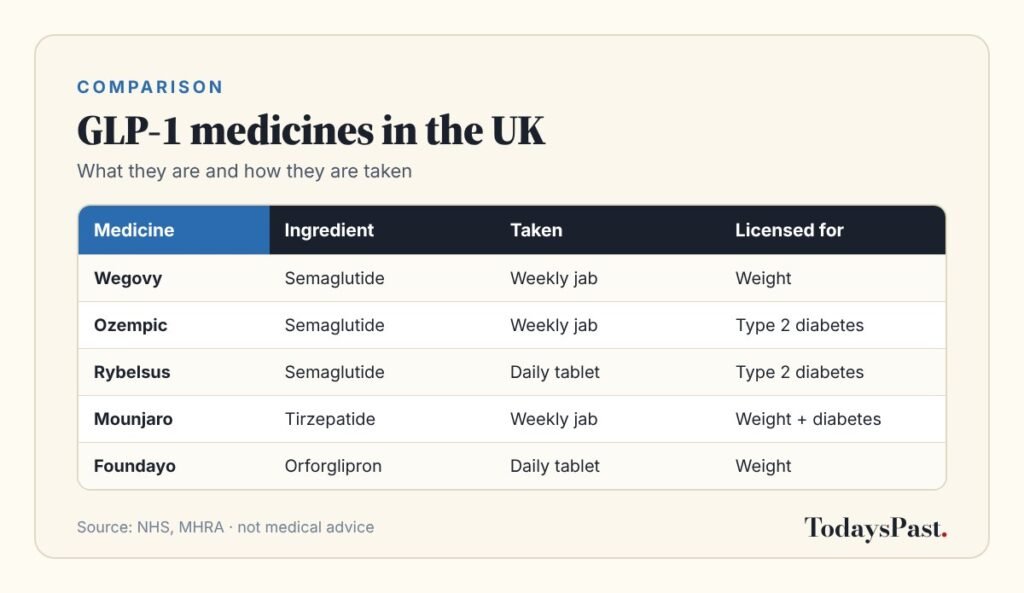
| Medicine | Active ingredient | How it is taken | Licensed for |
|---|---|---|---|
| Wegovy | Semaglutide | Weekly injection | Weight management |
| Ozempic | Semaglutide | Weekly injection | Type 2 diabetes |
| Rybelsus | Semaglutide | Daily tablet | Type 2 diabetes |
| Mounjaro | Tirzepatide (GLP-1 + GIP) | Weekly injection | Weight management and type 2 diabetes |
| Foundayo | Orforglipron | Daily tablet | Weight management |
Semaglutide is the same drug in Wegovy, Ozempic and Rybelsus; the brands differ in dose and what they are licensed for (NHS). Mounjaro works on two hormones, GLP-1 and GIP, which is one reason it tends to lead to more weight loss (NHS). Foundayo is a once-a-day tablet that went on sale in UK pharmacies in August 2026; we explain it in our Foundayo guide.
How much weight do people lose?
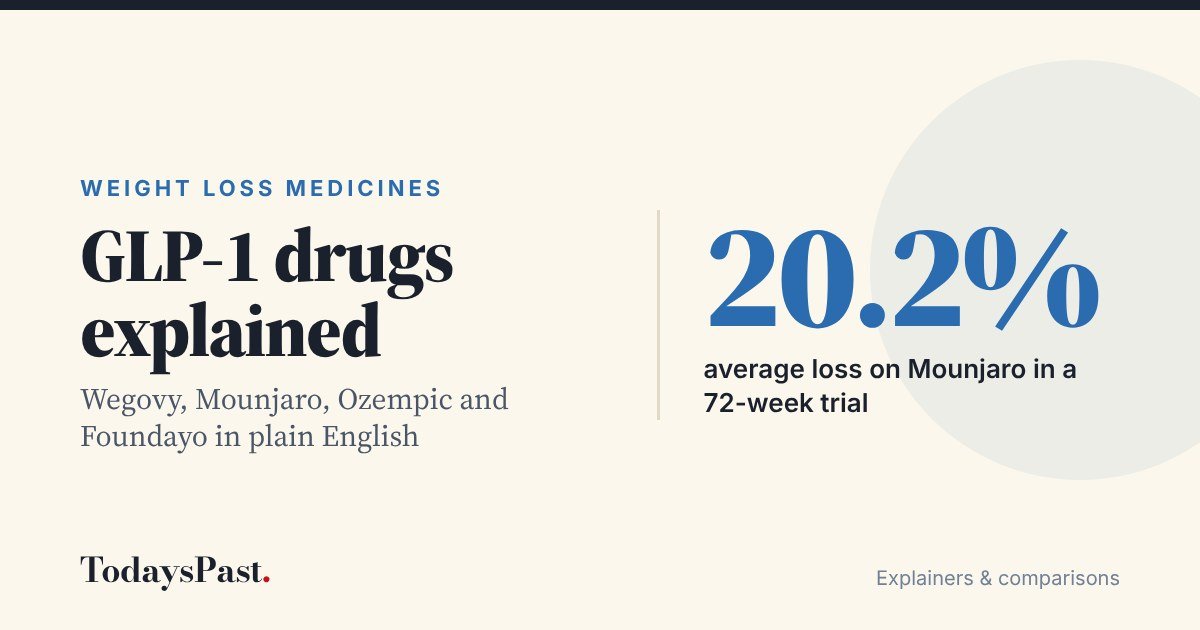
Results vary a lot from person to person, but clinical trials give a good idea of the average. In a head-to-head trial published in 2025, people taking Mounjaro lost an average of 20.2% of their body weight over 72 weeks, compared with 13.7% on Wegovy. In the Foundayo trials, average weight loss was around 11%.
To put that in context: for someone weighing 100kg (about 15 stone 10lb), 14% is about 14kg (2 stone 3lb). Some people lose much more, and some lose very little. Our Ozempic vs Wegovy vs Mounjaro comparison goes into the differences in more detail.
Can you get GLP-1 drugs on the NHS?
Yes, but not everyone qualifies, and access depends on which drug and where you live.
Wegovy on the NHS
NICE recommends Wegovy for adults who have at least one weight-related health condition and a BMI of at least 35, or a BMI of 30 to 34.9 if they meet the criteria for a specialist weight management service. It is prescribed through specialist weight management services, for a maximum of 2 years (NICE). Lower BMI thresholds, usually 2.5 points lower, apply to people from South Asian, Chinese, other Asian, Middle Eastern, Black African or African-Caribbean backgrounds.
Mounjaro on the NHS
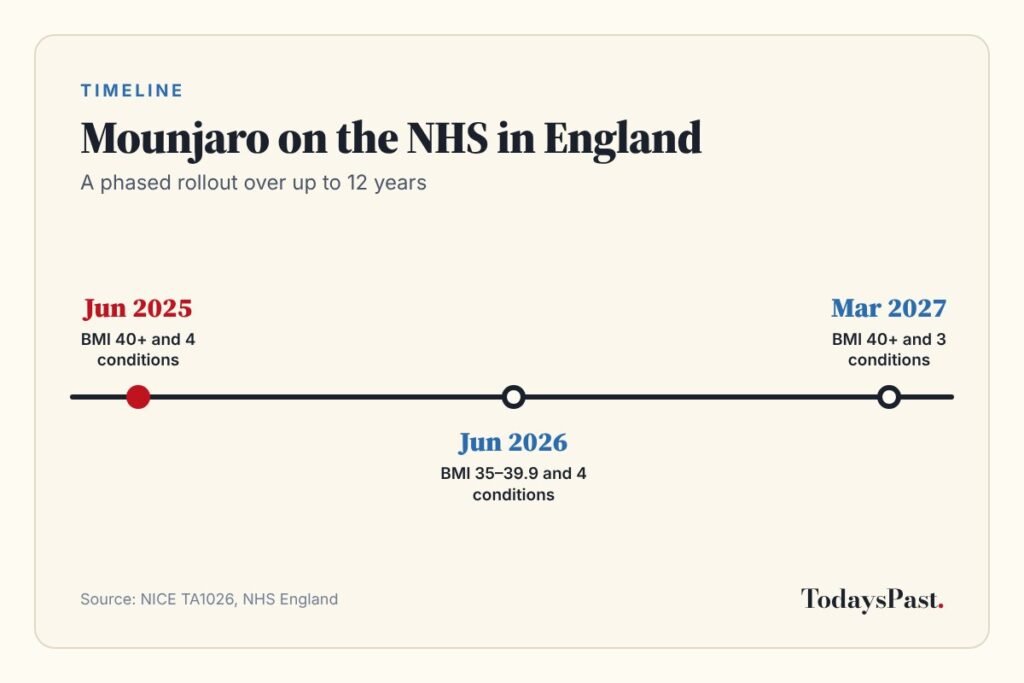
Mounjaro can be prescribed by GPs in England, but it is being rolled out in stages over up to 12 years, starting with the people who need it most (NHS England). Under NICE’s plan:
- From June 2025: people with a BMI of 40 or more and at least four of five weight-related conditions (type 2 diabetes, high blood pressure, heart disease, obstructive sleep apnoea and abnormal blood fats).
- From around June 2026: people with a BMI of 35 to 39.9 and at least four of those conditions.
- From around March 2027: people with a BMI of 40 or more and three of the conditions.
Around 220,000 people are expected to be offered it in the first three years (NICE). Rules in Scotland, Wales and Northern Ireland differ.
Buying GLP-1 drugs privately
Many people now buy Wegovy, Mounjaro or Foundayo from online or high street pharmacies. This is legal, but you still need a prescription: the pharmacy should check your BMI, medical history and other medicines before prescribing. Private prices vary by pharmacy and dose, and higher doses usually cost more.
Never buy weight-loss injections from social media, beauty salons or websites that do not ask about your health. The MHRA has warned that fake and unlicensed versions are being sold and can be dangerous.
Side effects
Most side effects are related to the stomach and are worst when you start or increase your dose. According to the NHS, common side effects include:
- Feeling or being sick
- Constipation or diarrhoea
- Stomach pain and indigestion
- Tiredness
- Hair loss
- Itchy or red skin where you inject
Rare but serious side effects include severe allergic reactions, inflammation of the pancreas (persistent, severe pain in the stomach that may spread to your back) and gallbladder problems. Call 111 or speak to a doctor straight away if you have severe or persistent stomach pain (NHS).
Important things to know before you start
- Pregnancy: GLP-1 medicines should not be used in pregnancy. The NHS advises stopping Wegovy at least 2 months before trying for a baby, and Mounjaro at least 4 weeks before.
- The contraceptive pill: Mounjaro can make the pill less effective. The NHS advises also using a barrier method, such as condoms, for 4 weeks after starting and after each dose increase.
- Diet and activity still matter: these medicines are licensed to be used alongside a reduced-calorie diet and more physical activity. Eating enough protein helps protect muscle as you lose weight; our protein calculator can help.
- It may not work for everyone: NICE suggests considering stopping Wegovy if less than 5% of starting weight has been lost after 6 months (NICE).
What happens when you stop?
Studies show that many people regain a large part of the weight they lost within a year of stopping, as appetite returns to how it was before. That does not mean the treatment was wasted, but it is worth planning for. Building habits that you can keep, like regular meals, more protein and daily walking, gives you the best chance of keeping weight off. Talk to your prescriber before stopping; they may reduce the dose gradually.
Related reading
- Ozempic vs Wegovy vs Mounjaro — UK Comparison 2026
- Foundayo: The New UK Weight Loss Pill Explained
- Calorie Deficit Explained: How to Set a Safe, Sustainable Target
- Intermittent Fasting Explained: Does 16:8 or 5:2 Really Work?
Frequently asked questions
What does GLP-1 stand for?
Glucagon-like peptide-1. It is a hormone released by your gut after eating that helps control appetite and blood sugar. GLP-1 medicines copy its effects.
Is Mounjaro a GLP-1?
Yes, and more. Mounjaro (tirzepatide) acts on both GLP-1 and another gut hormone called GIP, which is why it is sometimes called a dual agonist.
Is Ozempic the same as Wegovy?
They contain the same drug, semaglutide. Ozempic is licensed for type 2 diabetes and Wegovy for weight management, and Wegovy goes up to a higher dose.
Can my GP prescribe Mounjaro for weight loss?
In England, GPs can prescribe it to people who meet the current phase of the NHS rollout. At first that means people with a BMI of 40 or more and at least four weight-related health conditions.
How quickly do GLP-1 drugs work?
Many people notice reduced appetite within the first few weeks, but weight loss is gradual. The doses are increased slowly over several months, and most trial results are measured after more than a year.
Do you have to take GLP-1 drugs forever?
Not necessarily, but many people regain weight after stopping. NHS treatment with Wegovy is limited to 2 years. Talk to your doctor or pharmacist about the right plan for you.
Sources: NHS: Semaglutide; NHS: Tirzepatide; NICE TA875; NICE TA1026; NHS England: Medicines for obesity. This article is for general information and is not medical advice.