How Smart EV Charging Is Reducing Energy Costs for Homeowners
Key Takeaways
- Smart EV charging helps homeowners reduce energy bills and manage electricity use more effectively.
- Combining solar energy with smart charging can further lower dependency on the grid.
- Time-of-use pricing and bidirectional charging expand options for cost savings and increased energy security.
Table of Contents
- Understanding Smart EV Charging
- Benefits of Smart Charging for Homeowners
- Integrating Solar Power with EV Charging
- Leveraging Time-of-Use Tariffs
- Exploring Bidirectional Charging
- Implementing Smart Charging at Home
- Future Trends in Smart EV Charging
- Conclusion
Electric vehicles are transforming the way Americans drive and power their homes, making sustainability and efficiency more accessible than ever. However, the decision to adopt an EV comes with new considerations for how and when to charge. Advances in smart charging technology allow homeowners to take greater control over their energy usage, leading to meaningful reductions in electricity costs. For those interested in setting up an efficient at-home setup, exploring EV charger installation options in your area can be a simple first step toward maximizing savings.
When charging is managed intelligently, not only do households benefit from lower bills, but the overall demand on the electrical grid can be balanced. This is especially valuable as the number of electric vehicles increases nationwide and energy reliability becomes more important. Many homeowners are also seeking ways to leverage their EVs in conjunction with renewable energy sources to further cut costs and reduce their environmental footprint.
Innovative features like load management, scheduled charging, and integration with solar panels have expanded what’s possible with residential charging systems. Those exploring home EV charging solutions will find that smart technology now plays a critical role in getting the best value from an electric vehicle investment.
Understanding Smart EV Charging
Smart EV charging enables electric vehicles, charging hardware, and energy providers to communicate and share data to optimize charging sessions. This approach takes into account real-time energy demand, grid conditions, and electricity pricing to automatically schedule charging when it is most efficient and affordable. Leveraging smart charging tools can also help distribute power more evenly across neighborhoods, supporting wider adoption of clean vehicles.
Benefits of Smart Charging for Homeowners
With traditional EV charging, plugging in during the evening can coincide with peak grid times, often resulting in higher energy prices and greater strain on infrastructure. By utilizing smart chargers or energy management systems, homeowners can:
- Lower Electricity Costs: Charging can be scheduled when demand is low, and rates are cheaper, leading to major annual savings.
- Promote Grid Stability: Staggered charging reduces the risk of outages and can improve reliability for the entire community.
- Improve Sustainability: Smart systems allow for maximum use of renewable energy when it is available, supporting a lower carbon footprint.
Integrating Solar Power with EV Charging
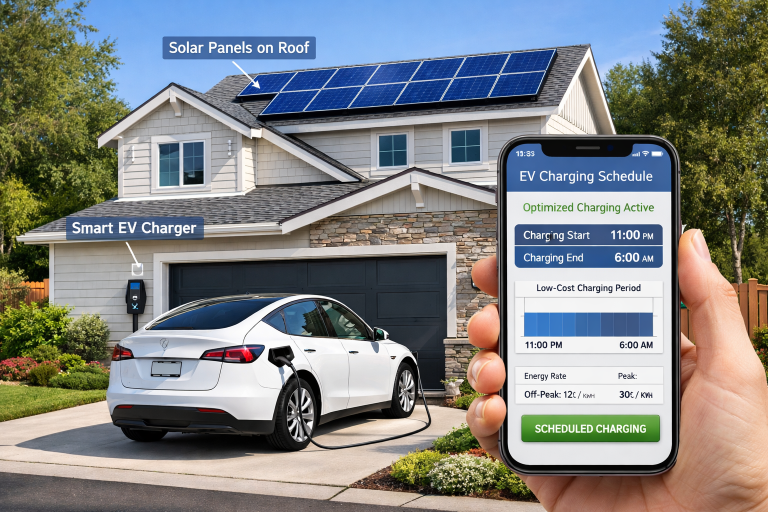
Pairing rooftop solar panels with automated EV charging adds another layer of value. As solar panels generate power throughout the day, this electricity can be directed to your vehicle, significantly reducing reliance on utility-supplied energy. If your home is equipped with a battery or energy storage system, excess solar energy can be stored and then used to charge the car at a later time, boosting household efficiency and further reducing long-term costs. The synergy between solar power and smart EV charging supports both cost savings and greater energy independence.
Leveraging Time-of-Use Tariffs
Many utility companies now offer time-of-use (TOU) pricing structures where the cost of electricity fluctuates based on overall grid demand. Smart EV charging systems can be programmed to take advantage of these variable rates, automatically charging your vehicle during the lowest-cost windows. This approach is particularly beneficial for those who drive consistent distances daily or own EVs with larger batteries. Being mindful of TOU tariffs can result in significant savings over time, even without additional home upgrades or solar installations.
Exploring Bidirectional Charging
Bidirectional charging, also known as vehicle-to-home (V2H) or vehicle-to-grid (V2G), is a developing feature that lets energy flow both into and out of the electric vehicle. In practice, this means your EV battery can serve as a power source for your home during times of high electricity rates or even act as a backup supply during outages. While still emerging, this technology has the potential to further enhance household energy resilience and improve return on investment for EV owners.
Implementing Smart Charging at Home
To realize the advantages of smart EV charging, homeowners should assess their daily routines and energy needs. Investing in an energy management system or compatible smart charger can provide the flexibility necessary for advanced scheduling and automation. Integrating your system with solar panels or a home battery adds a layer of control, ensuring your home makes the most efficient use of both grid and renewable power. Ongoing monitoring, through apps or utility dashboards, allows users to fine-tune schedules and further optimize energy use as household patterns change.
Future Trends in Smart EV Charging
The landscape of residential EV charging is evolving rapidly. Artificial intelligence is being adopted for predictive charging schedules, which anticipate home energy needs and maximize cost savings automatically. Enhanced integrations with home automation tools, such as smart thermostats and connected appliances, are set to create even smarter and more efficient residential energy systems in the coming years. The growing market for energy management solutions is highlighted by increasing interest from both consumers and policymakers committed to sustainability and reducing costs.
Conclusion
Smart EV charging has become a vital tool for homeowners looking to save on electricity bills and optimize their use of new technology. Through flexible scheduling, integration with renewable energy, and the promise of future advancements such as AI-powered management and bidirectional charging, home EV charging is moving beyond simple convenience to become a key part of efficient and sustainable living.