Scotland Road Trips: 7 Scenic Routes, Itineraries and Planning Tips
Scotland is one of the best road-trip destinations in the UK: dramatic coastline, lochs, mountains, historic towns and quiet roads that reward slower travel. The right route depends less on a “perfect” itinerary and more on how many days you have, how comfortable you are driving narrow roads, and whether you prefer coastal scenery, mountains or historic towns.
This guide compares seven Scotland road-trip ideas and includes a realistic five-day North Coast 500 itinerary, plus practical advice on fuel, weather, accommodation and driving.
Published for planning purposes. Check official travel advice, road conditions and accommodation availability before you travel.
Choose your Scotland road trip
| Route | Best for | Suggested time | Driving difficulty | Highlights |
|---|---|---|---|---|
| North Coast 500 | Coastline, beaches, mountains and a full road-trip experience | 5–7 days | Moderate to challenging | Applecross, Ullapool, Durness, John O’Groats, Dornoch |
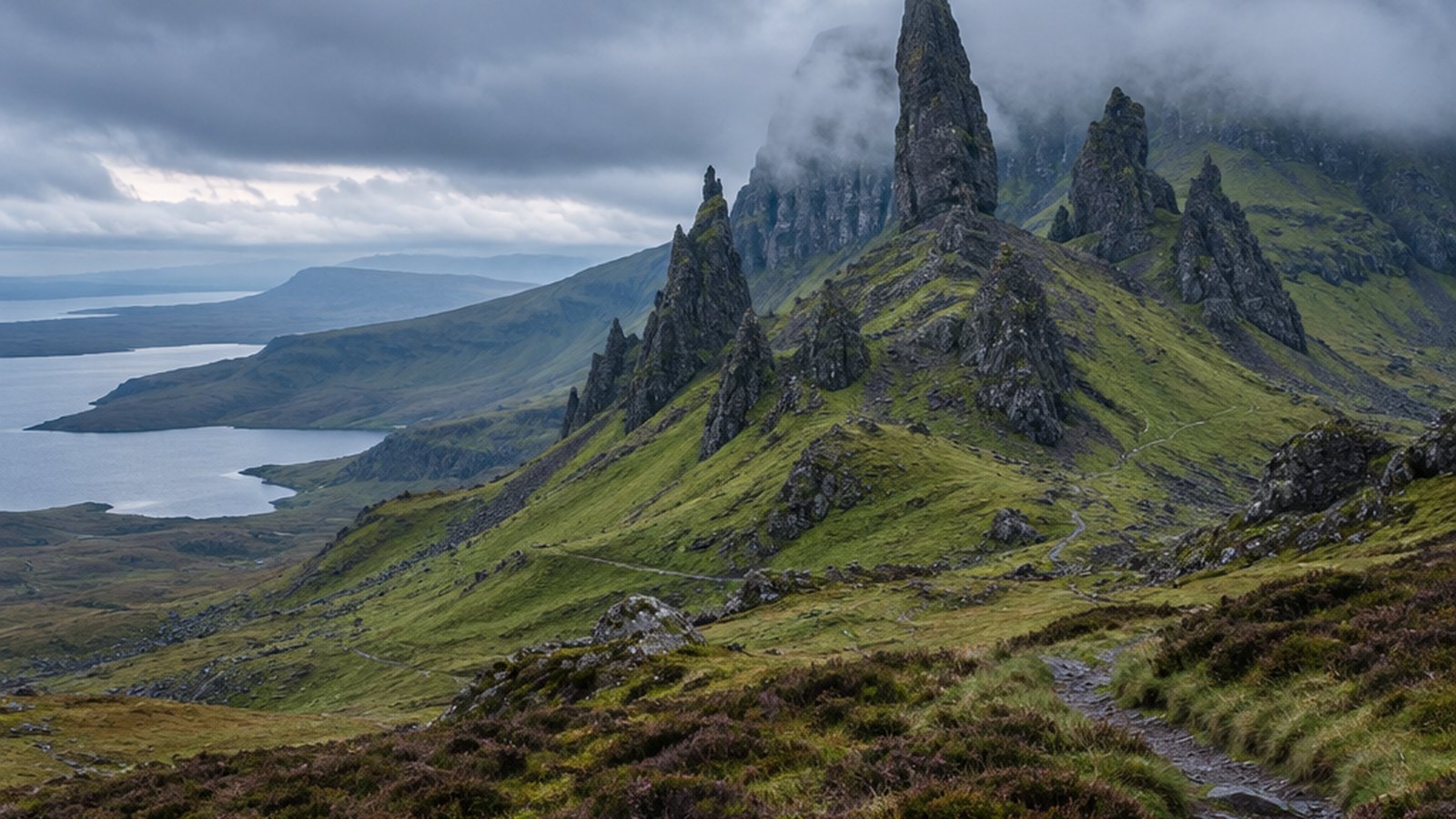
| Isle of Skye | Dramatic scenery and iconic landmarks | 3–5 days | Moderate | Portree, Old Man of Storr, Fairy Pools, Neist Point |
| Loch Ness and Inverness | A first Scotland trip with easier driving | 2–4 days | Easy to moderate | Inverness, Loch Ness, Urquhart Castle, Culloden |
| Cairngorms | Forests, wildlife, walking and quieter roads | 3–5 days | Easy to moderate | Aviemore, Cairngorm Mountain, Rothiemurchus, Grantown-on-Spey |
| Argyll and the west coast | Sea lochs, islands and a relaxed pace | 4–6 days | Moderate | Oban, Kintyre, Kilmartin Glen, Isle of Mull |
| Scottish Borders | History, rolling countryside and fewer crowds | 2–4 days | Easy | Melrose, Jedburgh, Kelso, Peebles |
| Orkney and the north | Archaeology, islands and a longer adventure | 6–10 days | Challenging | John O’Groats, Orkney, Caithness, Duncansby Head |
North Coast 500: a realistic 5-day itinerary
The North Coast 500, often called the NC500, is a 516-mile circular route beginning and ending in Inverness. It passes through Wester Ross, Sutherland, Caithness, Easter Ross, the Black Isle and Inverness-shire. VisitScotland suggests allowing around five to seven days for the full route.
Five days is possible, but it means longer driving days and less time for walks, detours and bad weather. If this is your first Scottish road trip, seven days is usually more comfortable.
Day 1: Inverness to Applecross
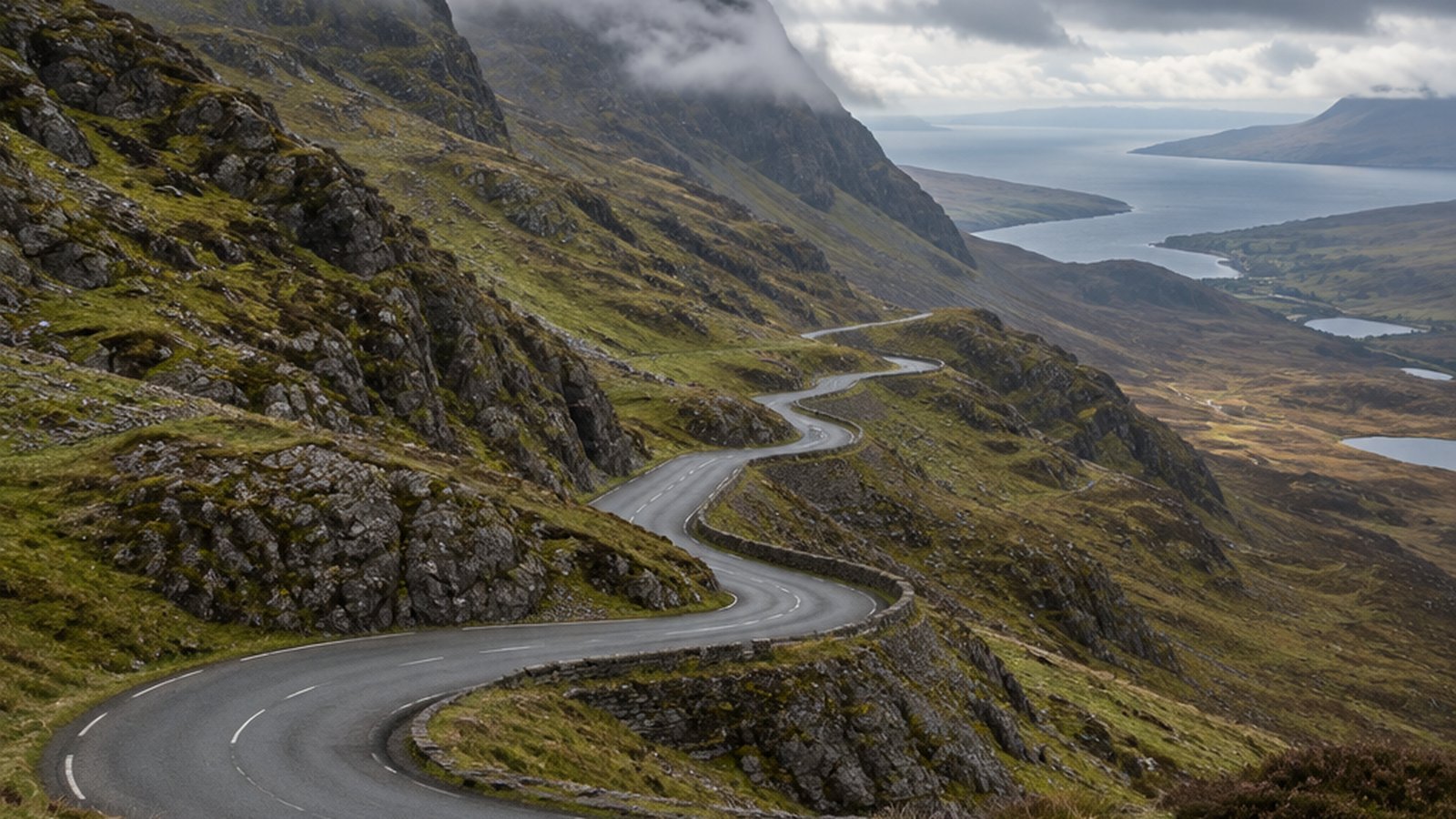
Collect your hire car or begin from Inverness, then drive west towards Lochcarron. The Applecross Peninsula is one of the route’s most memorable sections, with winding roads, sea views and the famous Bealach na Bà pass.
Check weather and road conditions before committing to the Bealach na Bà route. It is steep, narrow and unsuitable for nervous drivers, large motorhomes or poor weather.
Day 2: Applecross to Ullapool
Drive north through Torridon and along Loch Maree before reaching Ullapool. This is a good day for short walks, photography stops and a relaxed evening in Ullapool.
Do not treat driving time as the only measure of the day. Narrow roads, livestock, weather and viewpoint stops can easily extend a journey.
Day 3: Ullapool to Durness
Continue north into Sutherland. Consider stops around Assynt, including viewpoints near Lochinver and the dramatic coastline towards Durness.
Durness is a good base for Smoo Cave and nearby beaches. Book accommodation well ahead in summer, especially if travelling with a campervan.
Day 4: Durness to John O’Groats
Travel east along the north coast through Caithness. Stop at Duncansby Head if conditions allow, then continue to John O’Groats.
This section is less mountainous than the west coast but still remote. Fuel stations can be spread out, so refill when you can rather than waiting until the tank is low.
Day 5: John O’Groats to Inverness
Return south via Dornoch, which makes a pleasant final stop before Inverness. If you have a seventh day, add extra time around Ullapool, Skye or the Cairngorms instead of trying to squeeze more stops into the NC500.
Isle of Skye: 3-day outline
Three days is enough for a first visit if you focus on one side of the island rather than trying to see everything.
- Day 1: Portree, the Old Man of Storr and the Quiraing.
- Day 2: Fairy Pools, Glenbrittle and the western coastline.
- Day 3: Neist Point, Dunvegan or a slower return route.
Skye is popular, so book accommodation early and expect queues at well-known viewpoints. Start popular walks early in the day, especially in summer.
Driving in Scotland: what to expect
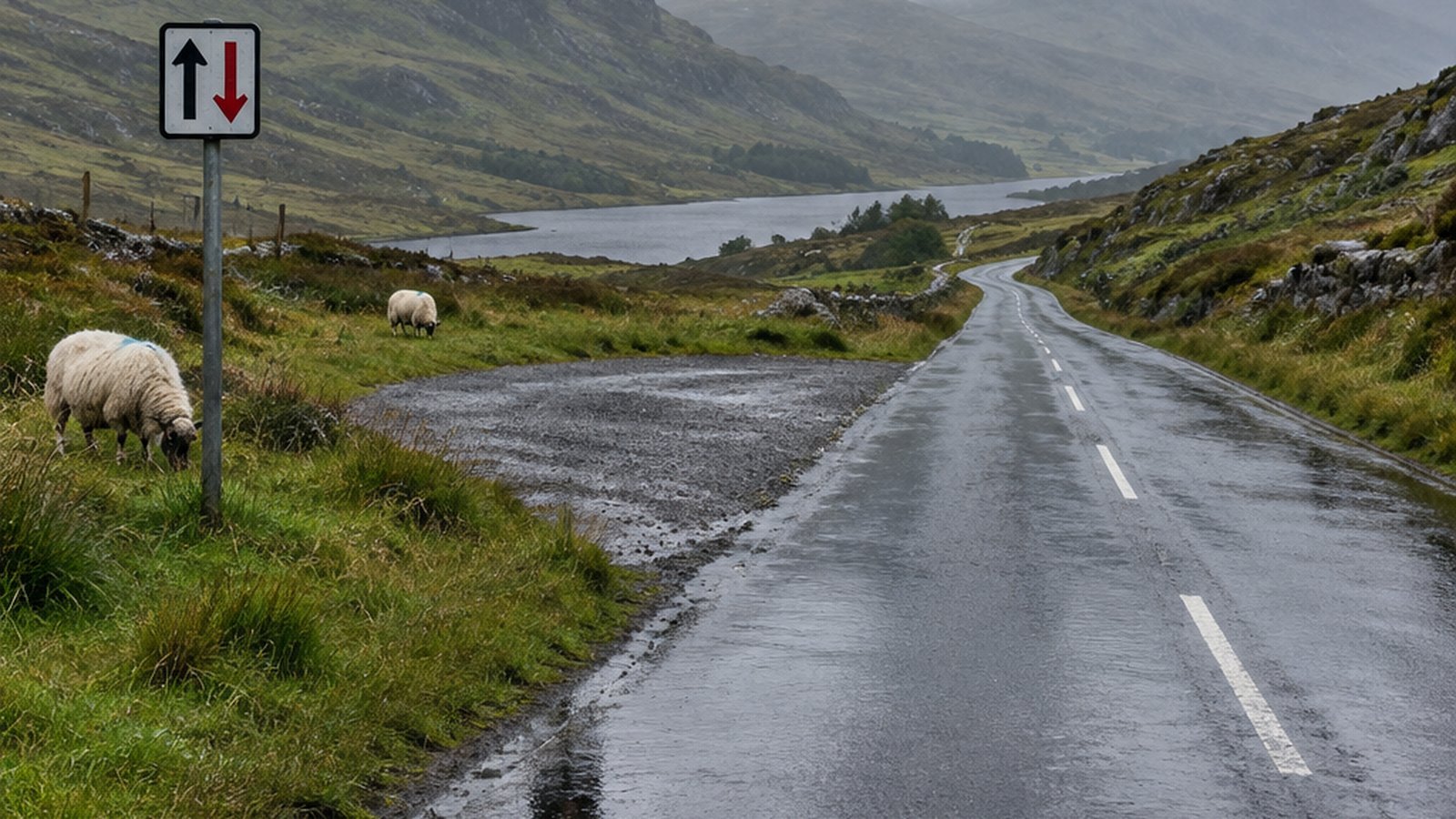
Scottish roads can be narrow, especially in the Highlands and on islands. Many rural roads are single track with passing places. Use passing places to let faster traffic pass, and do not park in them.
- Give yourself more time than a map suggests.
- Check fuel levels before remote stretches.
- Check weather and road closures before setting out.
- Use pull-ins for photographs rather than stopping in the road.
- Watch for sheep, deer and cyclists, particularly at dawn and dusk.
If you are hiring a car, check whether it allows travel on ferries or to specific islands. Some rental agreements have restrictions.
When to go
May, June and September are often good choices: longer daylight, generally more stable conditions than deep winter, and fewer peak-season crowds than July and August. Summer offers the best chance of long daylight hours, but accommodation and popular routes can be busy.
Winter road trips are possible, but require more planning. Daylight is short, weather can change quickly, and some attractions or services may have reduced hours.
What to pack
- Waterproof jacket and trousers.
- Sturdy walking shoes or boots.
- Layers, including a warm mid-layer.
- Phone charger, power bank and offline maps.
- Snacks and water for long driving days.
- Camera, binoculars and a small daypack.
- Medication, basic first-aid supplies and any travel documents.
Helpful tools
Use the days-between-dates calculator to work out how many full days you have, and the percentage calculator if you are comparing accommodation or travel costs. For a future trip-planning update, we will add a travel-budget and driving-distance calculator.
Frequently asked questions
How many days do I need for the North Coast 500?
Five days is the practical minimum for many travellers, but seven days gives more time for walks, weather delays and detours. VisitScotland describes the route as typically taking around seven days to circumnavigate.
Is the NC500 suitable for beginner drivers?
Parts of it are challenging because of narrow, winding and single-track roads. If you are new to rural driving, consider a shorter route or allow extra time.
Can I do Scotland in three days?
Yes, but choose one compact area such as Loch Ness and Inverness, or spend three days on Skye. Do not attempt the full NC500 in three days unless you are comfortable with long driving days.
Do I need to book accommodation in advance?
For summer, bank holidays and popular areas such as Skye, yes. Book early, particularly if travelling with a campervan or travelling as a family.
This article provides general travel information. Road conditions, weather, ferry services, opening times and travel requirements can change, so check official sources before travelling.
Sources: VisitScotland: North Coast 500; North Coast 500 official site; National Trust for Scotland: NC500.