
Cornwall Road Trip: A Practical 5-Day Coastal Itinerary
A Cornwall road trip works best when it leaves room for weather, traffic and the places you did not expect to enjoy. The county is compact on a map, but narrow lanes, seasonal visitor traffic and limited parking can make a list of distant stops unrealistic.
This itinerary is designed as a flexible five-day plan for a UK-based driver. Use it as a framework rather than a fixed schedule, and choose a base that reduces the amount of driving you need to do each day.

Before you set off
Check your vehicle, insurance, breakdown cover and route before leaving. In summer, allow extra time for traffic and parking rather than trying to fit in one more attraction.
- Check the weather forecast and any local travel warnings.
- Book accommodation with parking and a cancellation policy you understand.
- Plan no more than two or three main stops per day.
- Check whether car parks require payment, booking or have height restrictions.
- Keep fuel topped up in rural areas, particularly if travelling early or late. Our fuel cost calculator estimates what the trip will cost.
Cornwall Council advises booking parking in advance where available and checking signs for restrictions, charges and time limits. Its guidance also highlights that some car parks are seasonal, so availability and arrangements can change.
Choose a sensible base
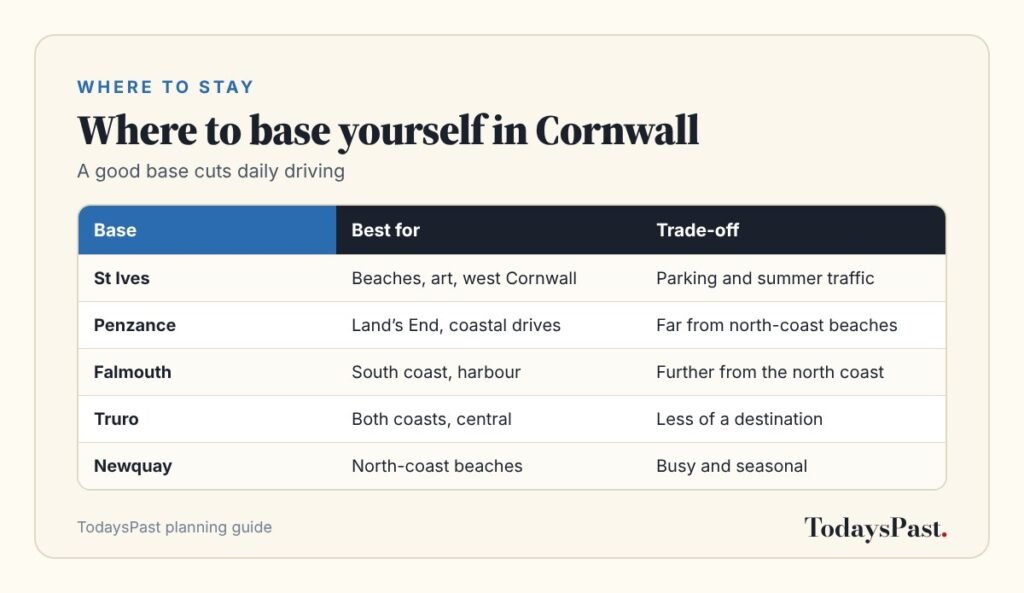
For a first Cornwall road trip, a central or northern base can reduce daily driving. St Ives, Penzance, Falmouth, Truro and Newquay each suit different priorities.
| Base | Best for | Trade-off |
|---|---|---|
| St Ives | Beaches, art and a scenic west Cornwall base | Parking and summer traffic can be challenging |
| Penzance | West Cornwall, Land’s End and coastal drives | Further from north-coast beaches |
| Falmouth | A flexible south-coast base with harbour access | Less convenient for some north-coast stops |
| Truro | A central base for exploring both coasts | Less of a destination in itself |
| Newquay | Beaches and north-coast drives | Can be busy and seasonal |
If you are travelling with children, prioritise accommodation with parking, easy access and nearby food options. A hotel or cottage that saves 20 minutes each way can matter more over several days than a slightly cheaper room further away.
Five-day coastal itinerary
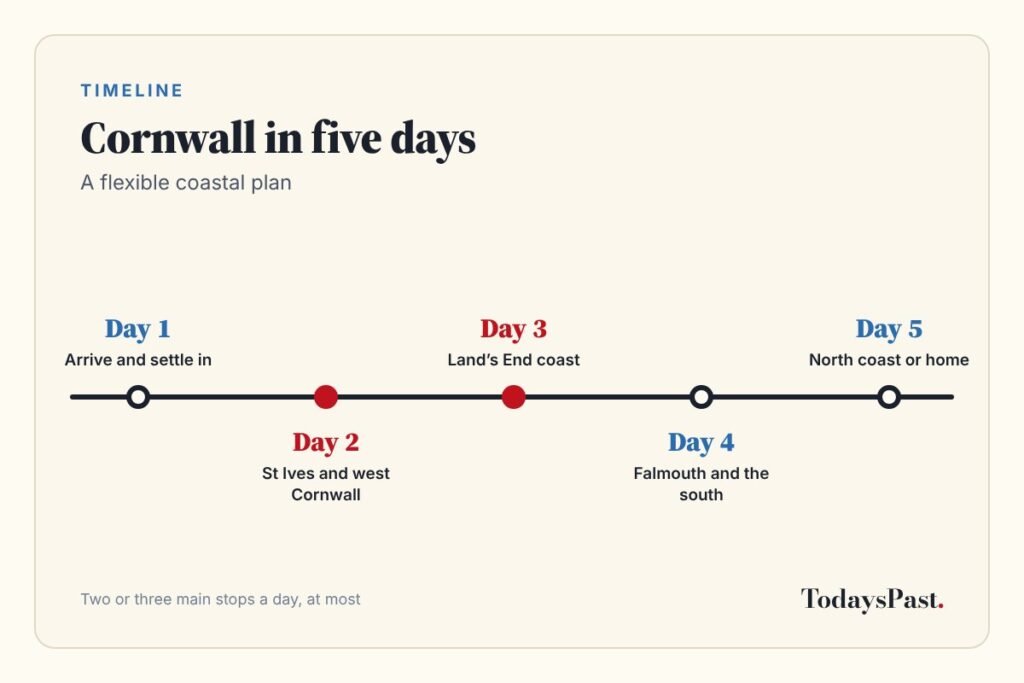
Day 1: Arrive and settle in
Keep arrival day simple. Travel to your base, collect keys or check in, and explore the immediate area rather than adding a long drive.
- Check in and unpack.
- Find the nearest supermarket, fuel station and car park.
- Take a short walk or visit a nearby beach.
- Have an easy meal rather than booking a complicated dinner.
Day 2: West Cornwall and St Ives
Use this day for west Cornwall’s coastline and St Ives. Start early if you want to improve your chances of easier parking, especially in summer.
- Drive towards St Ives.
- Explore the town, harbour and beaches.
- Choose one viewpoint or coastal walk.
- Return before the evening rush if possible.
Day 3: Land’s End and the south-west coast
Make this a scenery-focused day rather than trying to combine it with too many inland stops. The roads can be slow, and parking near popular sites can be limited.
- Drive towards Land’s End.
- Choose one major viewpoint or coastal stop.
- Visit a nearby village or beach.
- Leave time for a relaxed return journey.
Day 4: South coast and Falmouth
Use the south coast for a change of pace. Falmouth works well for harbour walks, maritime history and a more urban break from narrow coastal lanes.
- Drive to Falmouth.
- Walk the harbour area or visit a museum.
- Choose one nearby beach or village.
- Keep the afternoon flexible for weather.
Day 5: North coast or a flexible final day
Make the final day depend on your departure time. A north-coast stop can work well if you are heading east, but do not add a long detour immediately before a long drive home.
- Choose one nearby beach, village or attraction.
- Leave time to pack and check out.
- Plan a realistic route home, including breaks.
- Do not schedule a major activity immediately before departure.
Shorter options
If you only have three days, reduce the number of bases and avoid trying to see both coasts in depth.
- Choose one base for the whole trip.
- Use day one for arrival and a local walk.
- Use day two for one scenic coastal area.
- Use day three for a final stop and the journey home.
For a four-day trip, add one flexible day rather than adding another long drive. This gives you room to move an outdoor day if the weather changes.

Driving and parking in Cornwall
Cornwall’s roads can be narrow, winding and busy in peak season. Plan routes that avoid repeated crossings of the county and check parking before setting out.
- Use official car parks where possible and check their opening hours.
- Do not park on verges, narrow lanes or areas that block access.
- Check whether a car park has a height restriction if you are driving a campervan or roof-boxed car.
- Allow extra time in July and August, especially around beaches and popular villages.
- Consider arriving early or later in the day for popular coastal stops.
Visit Cornwall advises planning routes and allowing extra time for narrow roads and seasonal traffic. It also recommends checking road closures and parking arrangements before setting out.
Family-friendly alternatives
A road trip does not need to be built entirely around viewpoints and long walks. Build in one lower-effort activity each day so the trip remains enjoyable for everyone.
- Choose a beach with facilities and easy access.
- Look for sheltered walks if wind is strong.
- Plan a museum, aquarium or indoor activity as a weather backup.
- Keep snacks, water and spare layers in the car.
- Let children help choose one stop each day.
Food and supplies
Book one or two memorable meals if that matters to you, but leave other evenings flexible. Popular restaurants can be busy, particularly in summer and around weekends.
- Stock up on basics soon after arrival.
- Keep a cool bag for picnic supplies.
- Check opening times for smaller shops and pubs.
- Book ahead for a special meal or a larger group.
Make the trip sustainable
Keep your impact low by using designated parking, taking rubbish home where bins are full, and staying on marked paths. Respect private land, livestock and coastal wildlife.
- Use official car parks and designated access points.
- Do not block gates, lanes or residents’ access.
- Take litter with you if bins are unavailable.
- Keep dogs under control where required.
- Check local guidance before lighting any fire or barbecue.
Related reading
- Scotland Road Trips: 7 Scenic Routes, Itineraries and Planning Tips
- Camping Packing List: Essential Gear for a UK Campsite Trip
- Best European City Breaks from the UK: 15 Ideas
Frequently asked questions
How many days do you need for a Cornwall road trip?
Five days is a comfortable starting point for a coastal itinerary with time to explore. Three days can work if you limit yourself to one base and a small number of stops.
Is Cornwall easy to drive around?
Some routes are straightforward, but narrow lanes, hills and seasonal traffic can make journeys slower than expected. Allow extra time and avoid overpacking each day.
When is the best time for a Cornwall road trip?
Late spring and early autumn are often good choices for quieter roads and more comfortable walking. Summer offers longer days but also more traffic and demand for accommodation and parking.
Do I need to book parking?
Check the specific car park and date. Some sites offer advance booking, while others are first come, first served or seasonal. Do not assume that a space will be available.
This article provides general travel-planning information. Check current road, parking, weather and local guidance before travelling.
Sources: Cornwall Council: parking; Visit Cornwall.