Lisbon City Break: A Practical Guide for First-Time Visitors
Lisbon is a good choice for a first European city break if you want a mix of viewpoints, historic neighbourhoods and a relaxed pace. It is also a city where a little planning helps: the hills, tram routes and popular attractions can make an overly packed itinerary tiring.
This guide is a practical planning framework rather than a fixed schedule. It assumes roughly three full days in the city and is written for first-time visitors travelling from the UK.
Where to stay in Lisbon
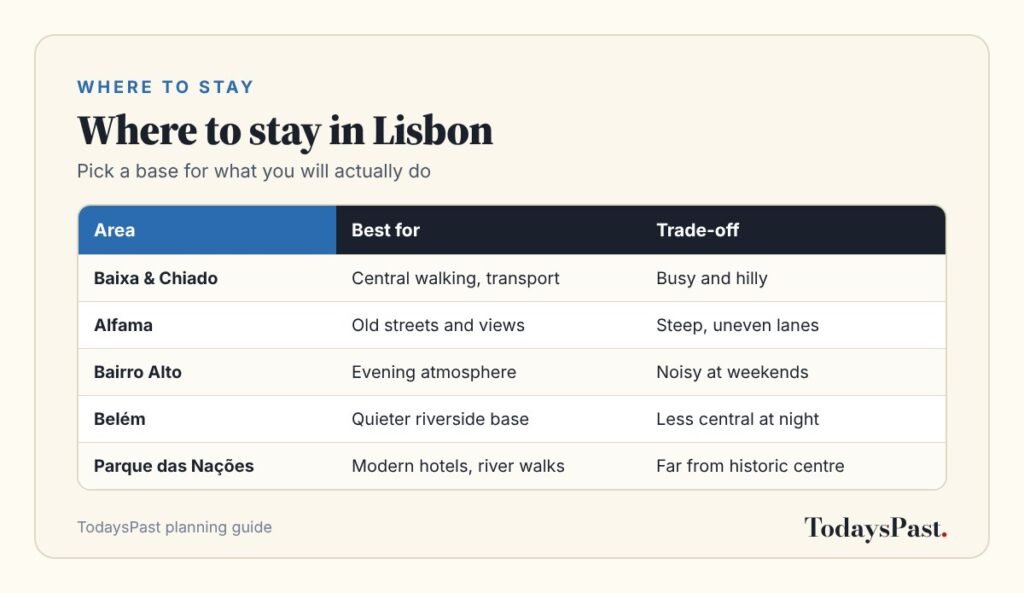
Choose accommodation based on the places you are most likely to visit, rather than simply looking for the cheapest central option.
| Area | Best for | Trade-off |
|---|---|---|
| Baixa and Chiado | Central walking, shops and easy access to transport | Can be busy and hilly |
| Alfama | Older streets, atmosphere and views | Steep lanes and uneven surfaces |
| Bairro Alto | Evening atmosphere and nightlife | Can be noisy, especially at weekends |
| Belém | A quieter riverside base | Less central for evening activities |
| Parque das Nações | Modern hotels and riverside walks | Further from the historic centre |
For a first visit, Baixa or Chiado is often the simplest base because it puts you close to transport and many central sights. If you prefer quieter streets, look at accommodation with a clear map of its route from a metro or tram stop; a hotel described as central may still involve a steep climb.
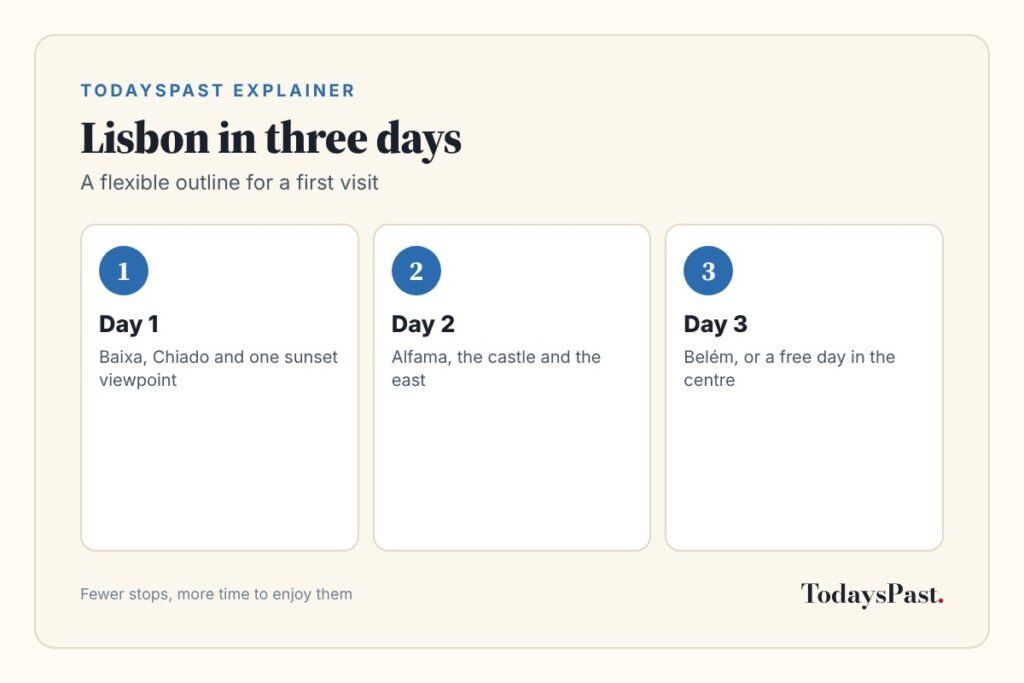
A flexible three-day outline
Day 1: Central Lisbon and viewpoints
Start with a manageable orientation day. Explore Baixa, walk towards Chiado, and choose one or two viewpoints rather than trying to reach every miradouro.
- Walk through Baixa and Chiado.
- Visit one major square or historic landmark.
- Choose one viewpoint for sunset or late afternoon.
- Leave the evening flexible for dinner and a slow walk.
Day 2: Alfama, Castelo and the east
Use this day for Lisbon’s older streets and eastern neighbourhoods. Keep the route simple, because the terrain can be demanding with luggage, heat or wet weather.
- Explore Alfama in the morning.
- Visit Castelo de São Jorge or another viewpoint.
- Take a tram or walk to a neighbourhood you want to see.
- Reserve one museum or cultural visit for the afternoon.
Day 3: Belém or a flexible city day
Make day three the day you decide based on your interests. Belém works well for riverside walking and major monuments, while a flexible day can be better if you want more time in the centre.
- Choose Belém for riverside sights and monuments.
- Alternatively, use the day for shopping, cafés and a museum.
- Leave time for a final viewpoint or neighbourhood you missed.
- Do not schedule a major departure-day activity immediately before travel.

Getting around Lisbon
Lisbon is walkable in parts, but it is not uniformly easy to walk. The historic centre has steep hills, cobbled streets and narrow pavements, so plan transport for the journeys that would otherwise become tiring.
- Use the metro for longer cross-city journeys where convenient.
- Use buses, trams, funiculars or lifts for steep routes.
- Check the route before relying on a tram; some are popular with visitors and can be crowded.
- Wear shoes with good grip, especially in wet weather.
- Keep an offline map or screenshot of your hotel’s location.
The official Visit Lisboa website provides information on museums, transport, the No. 28 tram and the Lisboa Card. Treat the card as a calculation, not an automatic saving: add up the attractions and journeys you would genuinely use before buying it.
What to book in advance
Book the items that have limited availability or fixed entry times before you travel. This is especially useful if your trip is short or falls during a busy period.
- Accommodation with a cancellation policy you understand.
- Major attractions with timed entry, if applicable.
- Restaurants for a special meal or a larger group.
- Airport transfer only after checking the alternatives.
Do not book every meal or activity in advance. Leave at least one flexible afternoon so that weather, queues or a discovery can change your plans.
What to pack
For a city break, pack light and prepare for changing conditions rather than assuming the weather will stay the same.
- Comfortable walking shoes with grip.
- A light waterproof layer.
- Layers for cooler evenings.
- A small day bag for water, sunscreen and essentials.
- A portable charger and offline maps.
Make the trip easier
The best Lisbon itinerary is usually the one with fewer destinations and more time to enjoy them. Choose one or two priorities per half-day, keep your accommodation close to transport, and leave room for an unplanned café or viewpoint.
For a first visit, three full days is a sensible starting point. If you are still choosing a destination, compare Lisbon with 14 other cities in our guide to European city breaks from the UK. If you want to add a day trip, consider making it a separate day rather than squeezing it into the city itinerary.
Related reading
- Best European City Breaks from the UK: 15 Ideas
- Cornwall Road Trip: A Practical 5-Day Coastal Itinerary
- Scotland Road Trips: 7 Scenic Routes, Itineraries and Planning Tips
Frequently asked questions
How many days do you need in Lisbon?
Three full days is a practical starting point for a first visit. Add a fourth day if you want a day trip or prefer a slower pace.
Is Lisbon easy to walk around?
Parts of Lisbon are walkable, but the hills can make some routes demanding. Use public transport for steep or longer journeys and wear suitable shoes.
Is the Lisboa Card worth it?
It depends on your itinerary. Compare the card price with the individual tickets and transport journeys you would actually use.
When is the best time to visit Lisbon?
Spring and autumn are often comfortable for walking, but conditions vary. Check the forecast and daylight hours before booking, especially if you plan to walk extensively.
This article provides general travel-planning information. Check current opening times, transport information, weather and entry requirements before booking.
Source: Visit Lisboa.