Stamp Duty in England 2026 Explained: Rates, Relief and Examples
Stamp duty is often the biggest cost of buying a home after the deposit. In England it is called Stamp Duty Land Tax, or SDLT, and the amount you pay depends on the price, whether you are a first-time buyer, and whether you already own another property.
The rules changed in April 2025, when temporary reliefs ended and more buyers started paying. Here are the rates in 2026, with worked examples you can check against your own purchase.
Stamp duty rates in England 2026
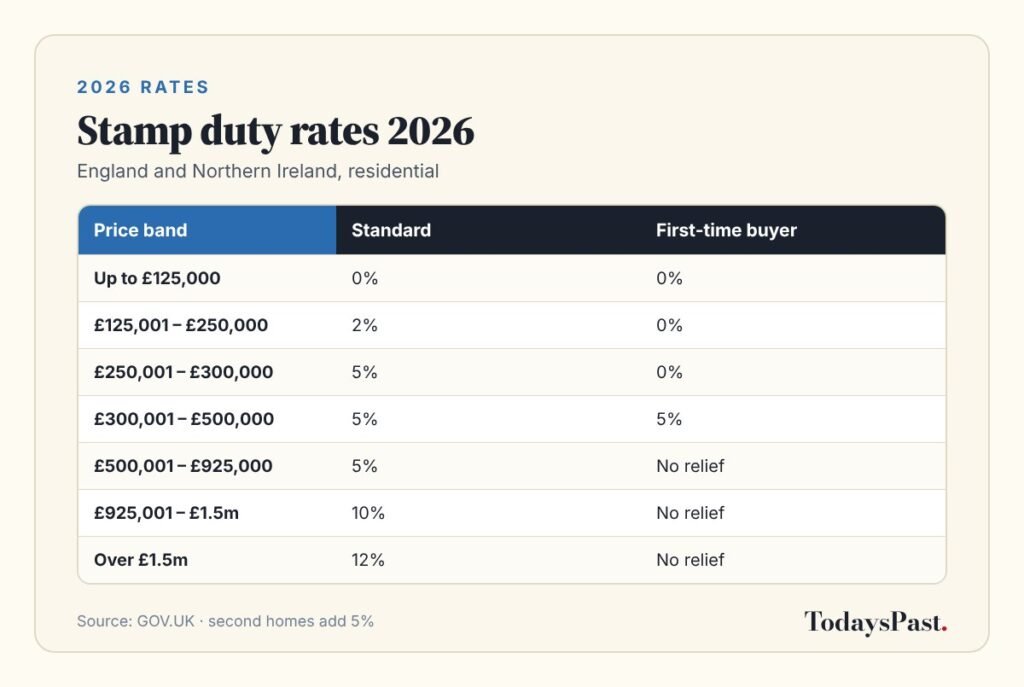
Like income tax, stamp duty is charged in slices. You pay each rate only on the part of the price that falls inside that band (GOV.UK).
| Part of the price | Rate |
|---|---|
| Up to £125,000 | 0% |
| £125,001 to £250,000 | 2% |
| £250,001 to £925,000 | 5% |
| £925,001 to £1.5 million | 10% |
| Over £1.5 million | 12% |
Example: a £295,000 home. Nothing on the first £125,000, £2,500 on the next £125,000, and £2,250 on the last £45,000. Total: £4,750. This is the example GOV.UK itself uses.
First-time buyer stamp duty relief
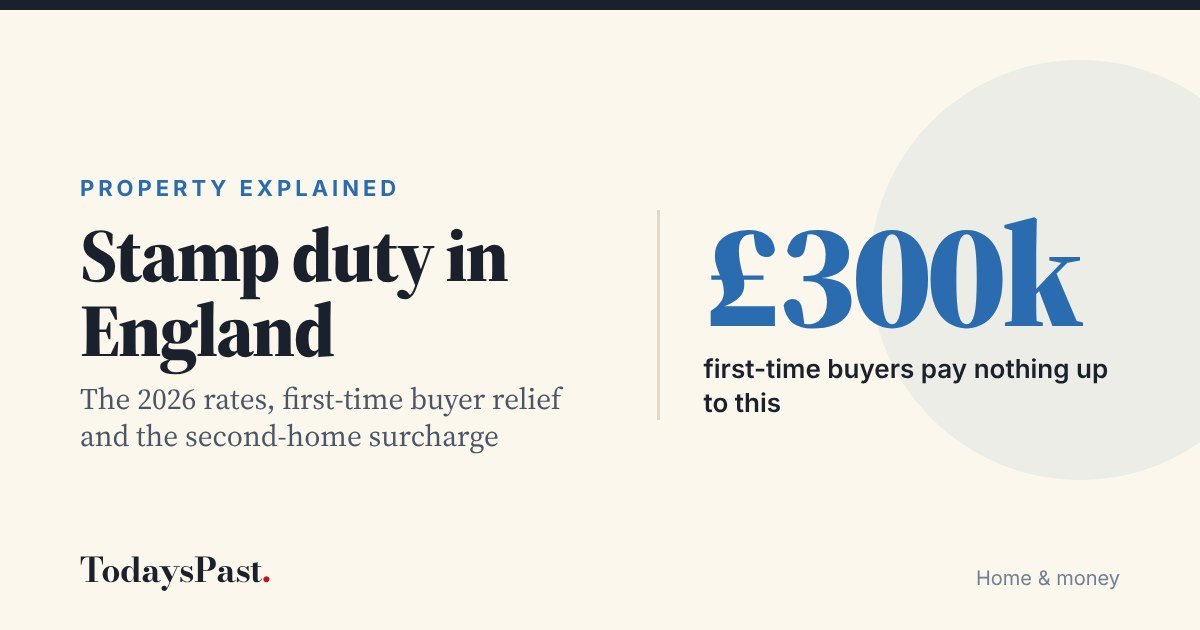
If you, and anyone you are buying with, have never owned a home anywhere in the world, you can claim first-time buyer relief on a home costing up to £500,000 (GOV.UK):
- 0% on the first £300,000
- 5% on the part from £300,001 to £500,000
- No relief at all if the price is over £500,000. You pay the standard rates on the whole price.
So a first-time buyer pays nothing on a £300,000 flat, and £10,000 on a £500,000 one. The home must be your main residence. Until 31 March 2025 the limits were higher: 0% up to £425,000, with relief up to £625,000.
Second homes and buy-to-let
If you will own more than one home after the purchase, you usually pay an extra 5% on top of the standard rates, on the whole price. This applies to second homes, holiday homes and buy-to-let properties (GOV.UK).
There is an important exception. If you are replacing your main home, you do not pay the surcharge, as long as you sell your old home. If you buy first and sell later, you pay the higher rate, but you can claim it back if you sell your previous main home within 36 months.
Buyers who are not UK resident also pay a 2% surcharge. You count as non-resident if you have not spent at least 183 days in the UK in the 12 months before buying.
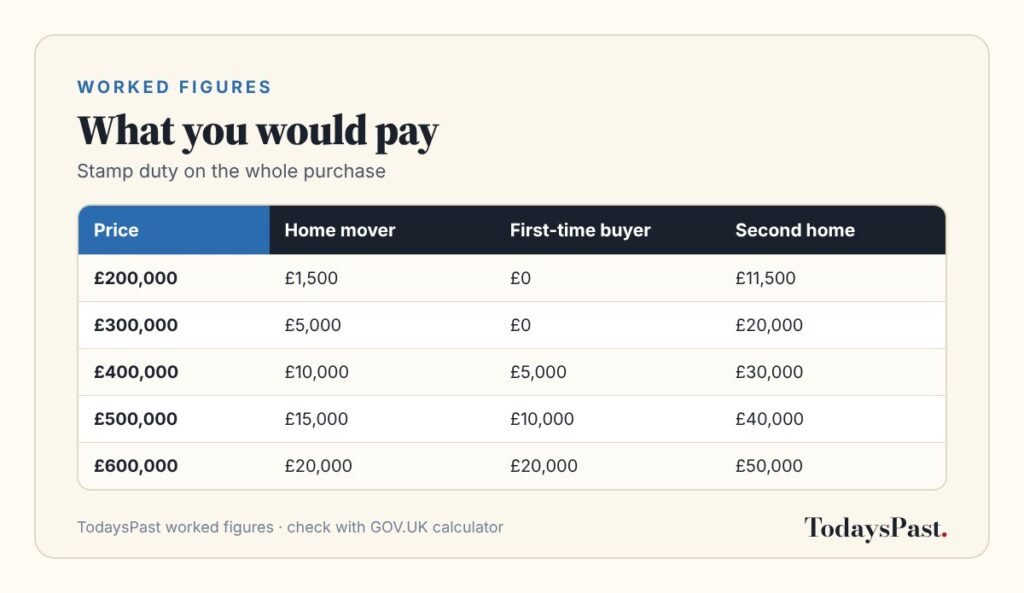
How much stamp duty would you pay?
| Price | Home mover | First-time buyer | Second home |
|---|---|---|---|
| £200,000 | £1,500 | £0 | £11,500 |
| £300,000 | £5,000 | £0 | £20,000 |
| £400,000 | £10,000 | £5,000 | £30,000 |
| £500,000 | £15,000 | £10,000 | £40,000 |
| £600,000 | £20,000 | £20,000 | £50,000 |
Worked out by TodaysPast for UK residents. Always confirm your own figure with the official HMRC stamp duty calculator.
When and how do you pay?
You must file a stamp duty return and pay within 14 days of completing your purchase. In practice, your solicitor or conveyancer usually does this for you and adds it to their bill, so make sure the money is ready before completion. Even if no stamp duty is due, a return is usually still needed for purchases over £40,000.
What about Scotland and Wales?
Stamp duty only applies in England and Northern Ireland. Scotland has Land and Buildings Transaction Tax, and Wales has Land Transaction Tax. Both have different rates and thresholds. If you are moving to Scotland, our guide to Scottish income tax explains how your pay will be taxed too.
Planning a move? Read our guide to UK mortgage rates, and see how prices have changed over time with our inflation calculator.
Related reading
- Cash ISA Allowance Stays at £20,000: What Changed
- Compound Interest Explained: How It Works, With UK Examples
- Scottish Income Tax 2026/27 Explained: Bands, Rates and Examples
- UK Mortgage Rates Explained: Fixed, Tracker and Switching Costs
Frequently asked questions
Frequently asked questions
How much is stamp duty on a £300,000 house?
£5,000 for a home mover, £0 for a first-time buyer, and £20,000 for a second home.
Do first-time buyers pay stamp duty in 2026?
Not on homes up to £300,000. Between £300,001 and £500,000 they pay 5% on the part above £300,000. Above £500,000 there is no relief.
What is the stamp duty threshold in 2026?
For most buyers, £125,000. For first-time buyers, £300,000.
How much is the second home stamp duty surcharge?
5% on top of the standard rates, charged on the whole price.
When do I have to pay stamp duty?
Within 14 days of completion. Your solicitor usually handles it.
Does stamp duty apply in Scotland and Wales?
No. Scotland has Land and Buildings Transaction Tax and Wales has Land Transaction Tax, with their own rates.
Sources: GOV.UK: Stamp Duty Land Tax residential rates, Own Your Home: stamp duty relief. Worked figures by TodaysPast. This is general information, not tax or legal advice.